Mapping the trail...
Tromsø, Norway · Arctic Expeditions
What a winter at our Dog Camp actually looks like: the dogs, the trail, the light, and the people meeting all three for the first time.
The Narrative Gallery
This is the unpolished album. Between the photos and clips below you will find short stories from camp life, because a picture of a howling husky is better with the reason for the howl. Everything here is shot at our Dog Camp or on our trails above it, most of it by our own mushers between tasks, which is why there is snow on the lens more than once.
It starts with one voice, usually one of the old dogs, and inside ten seconds it is ninety. The morning howl is not hunger and it is not alarm; as far as anyone can tell it is a roll call, the yard agreeing that everyone is here and the day can start. It lasts half a minute, stops as if conducted, and leaves the valley quieter than before. Guests who catch it on an early tour talk about it more than the northern lights.
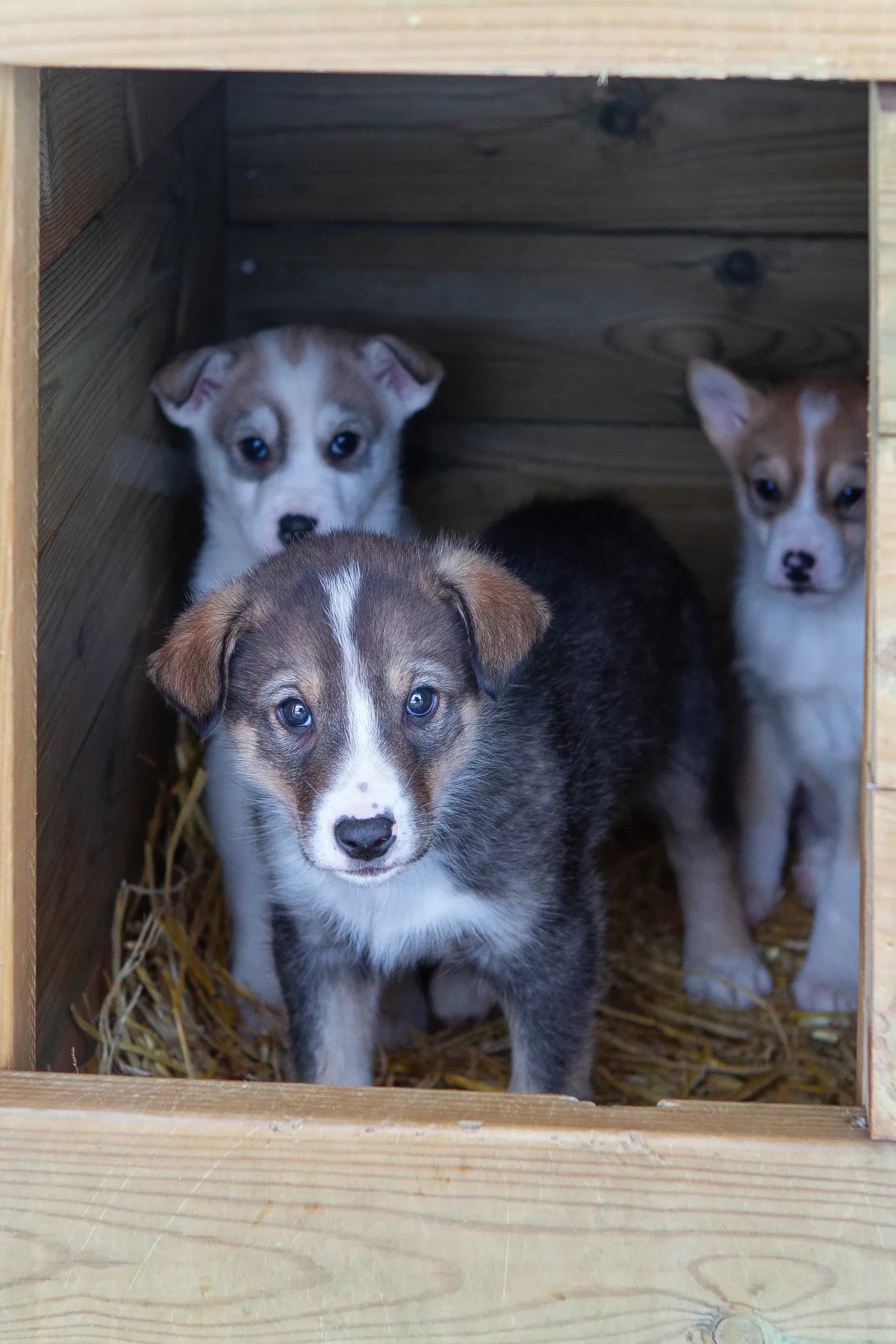
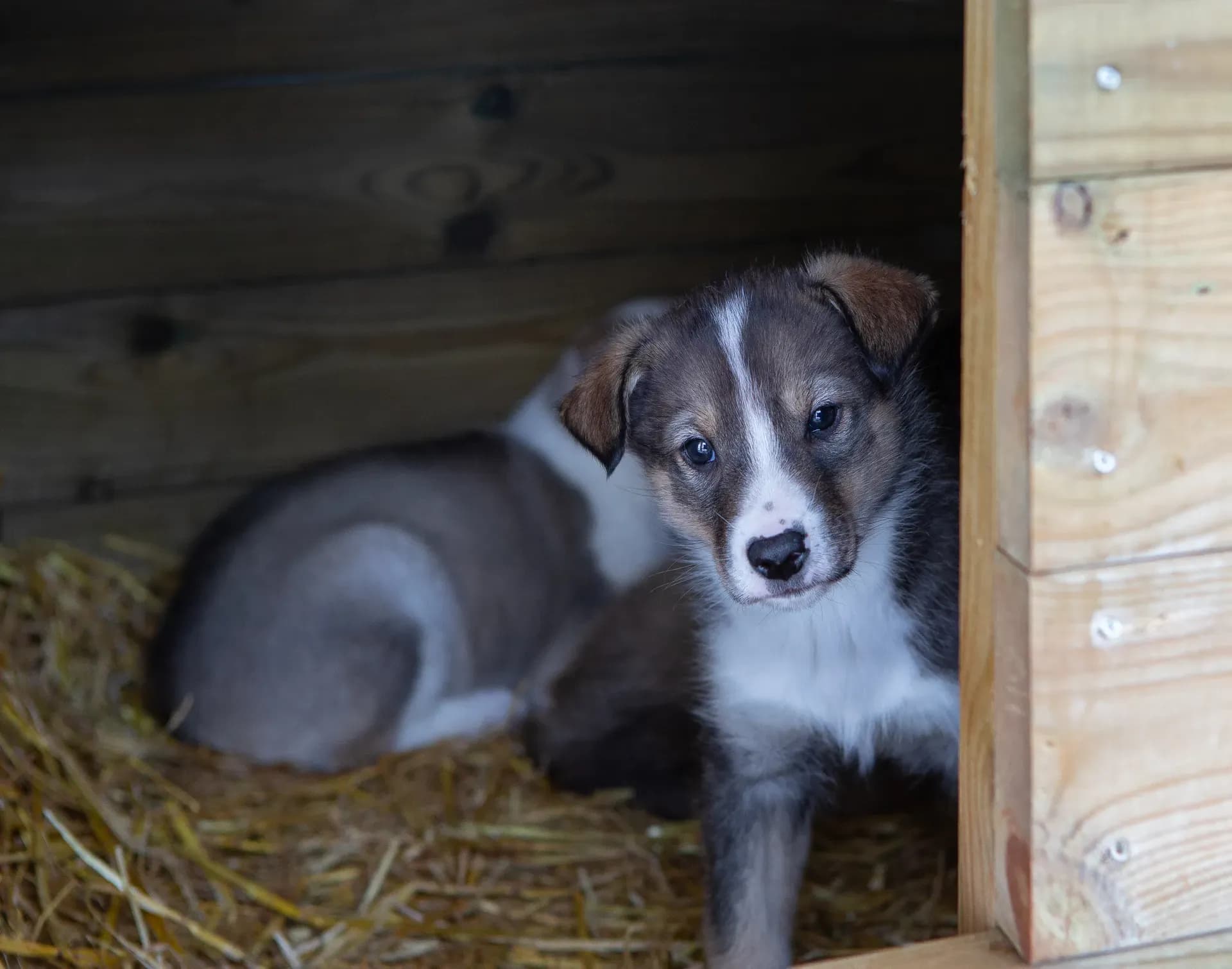
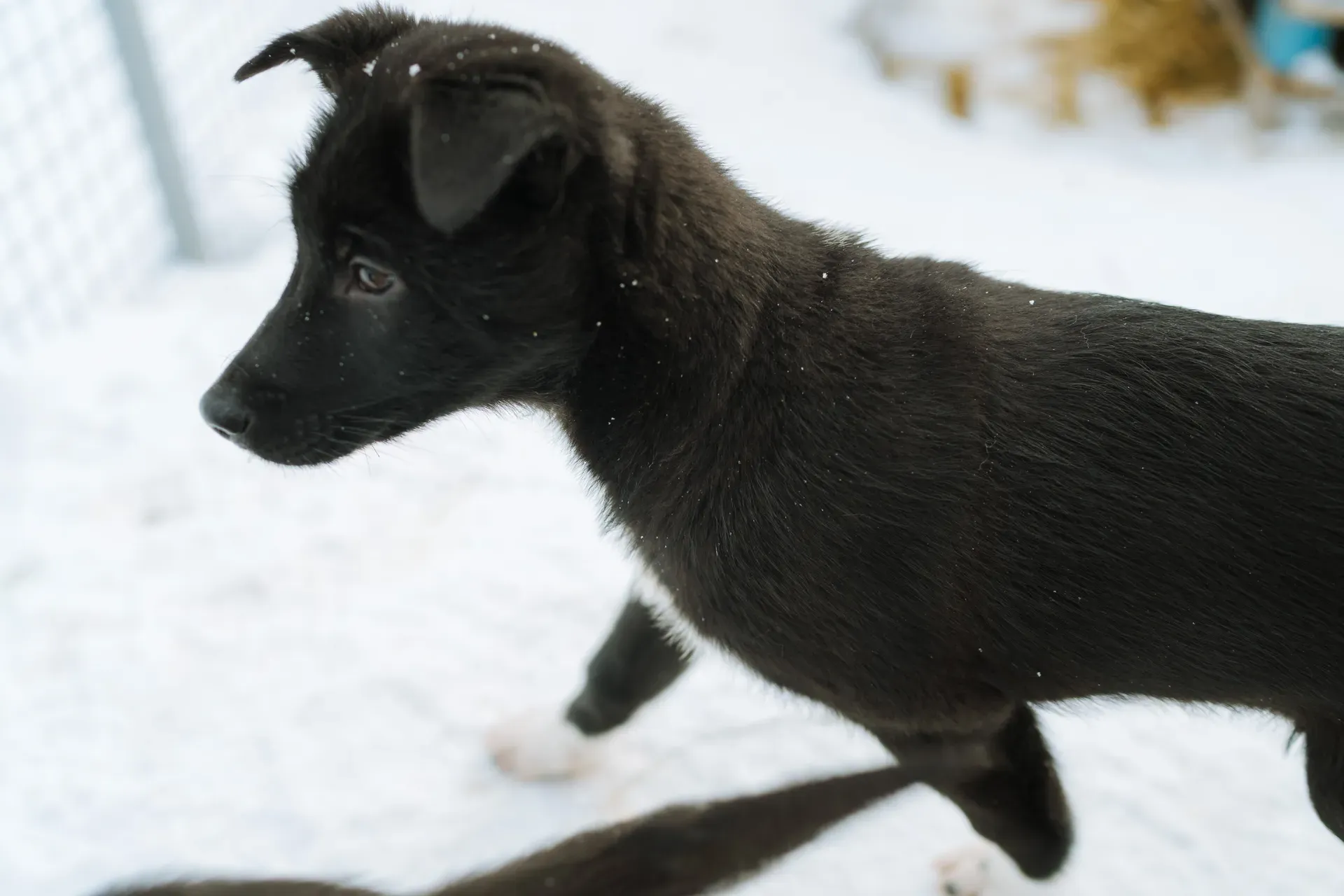
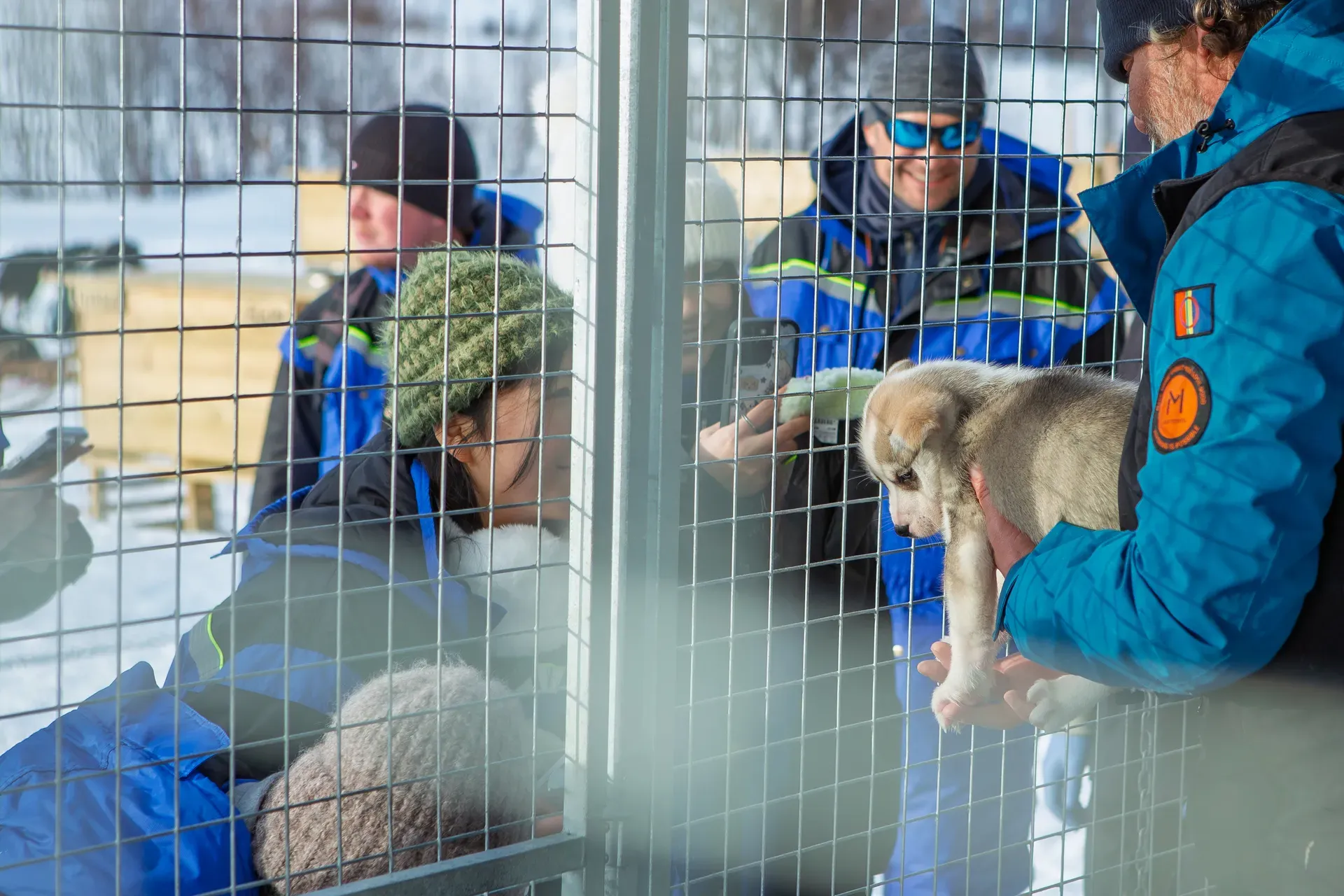
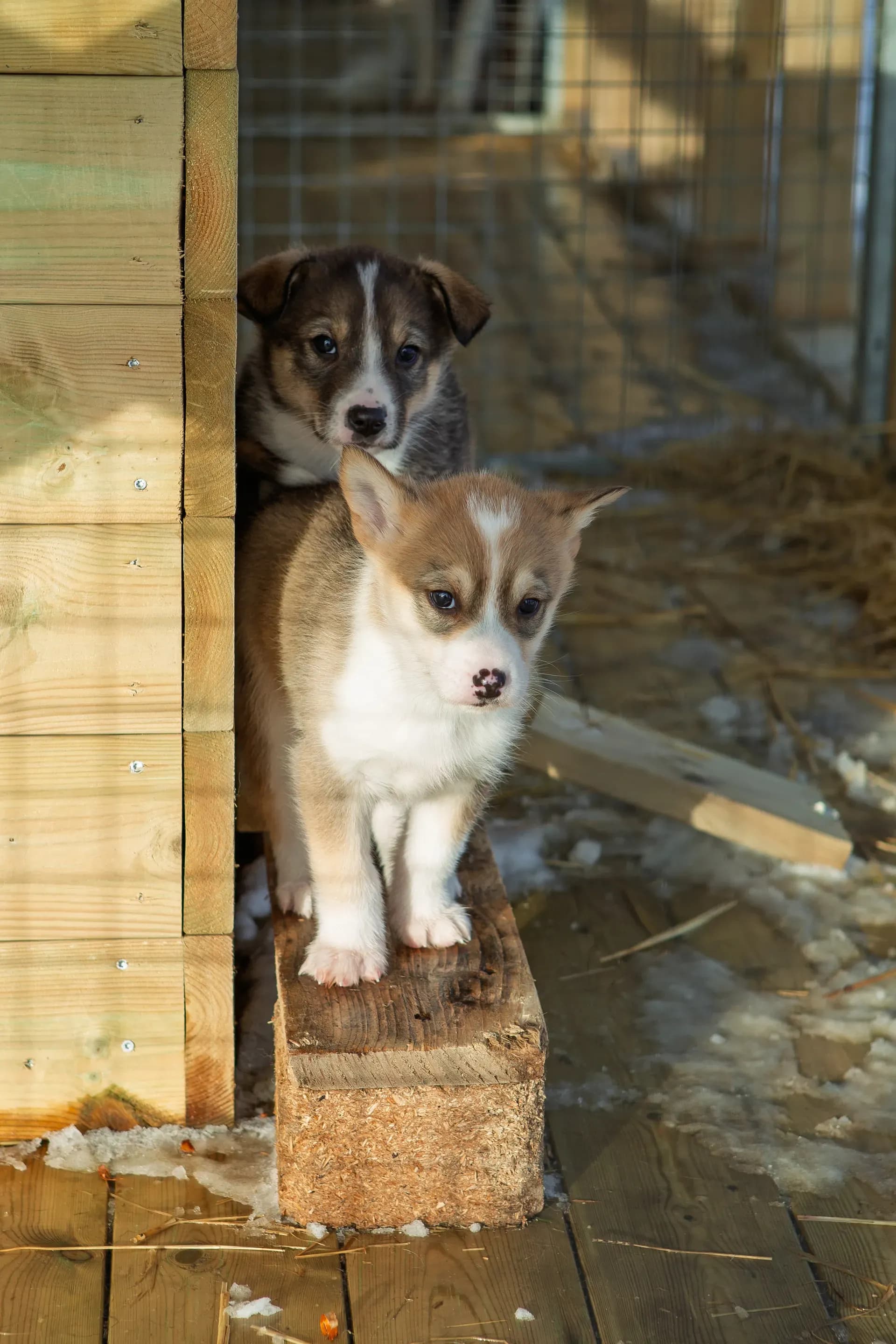
Some winters the yard has a nursery corner, and productivity across the camp drops measurably. Puppies here grow up underfoot, handled daily, introduced to harnesses the way children are introduced to swimming: slowly, playfully, and years before anything is expected of them. By the time a young dog runs its first short stretch beside an experienced neighbour, pulling is not a job it learned. It is the family business.
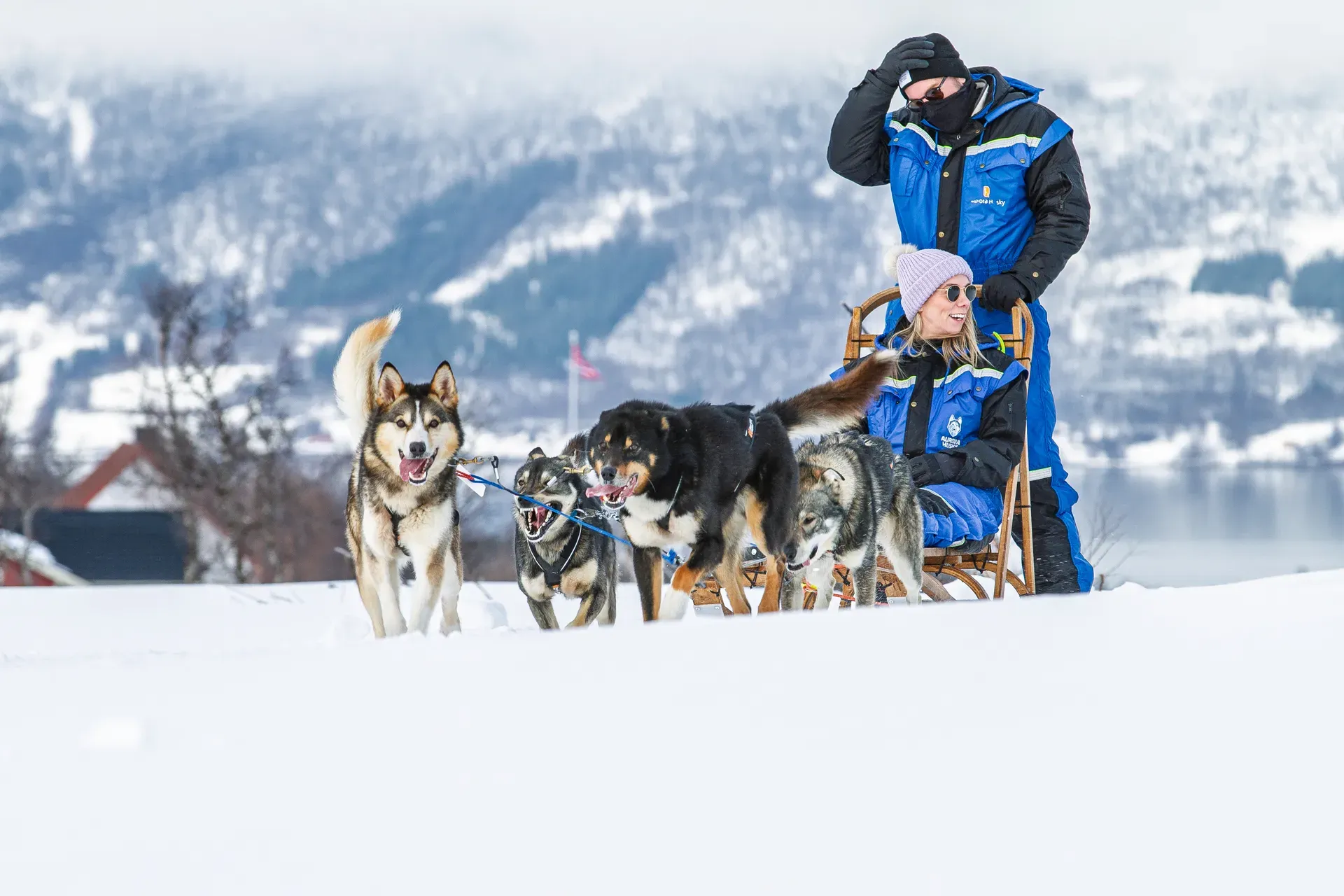
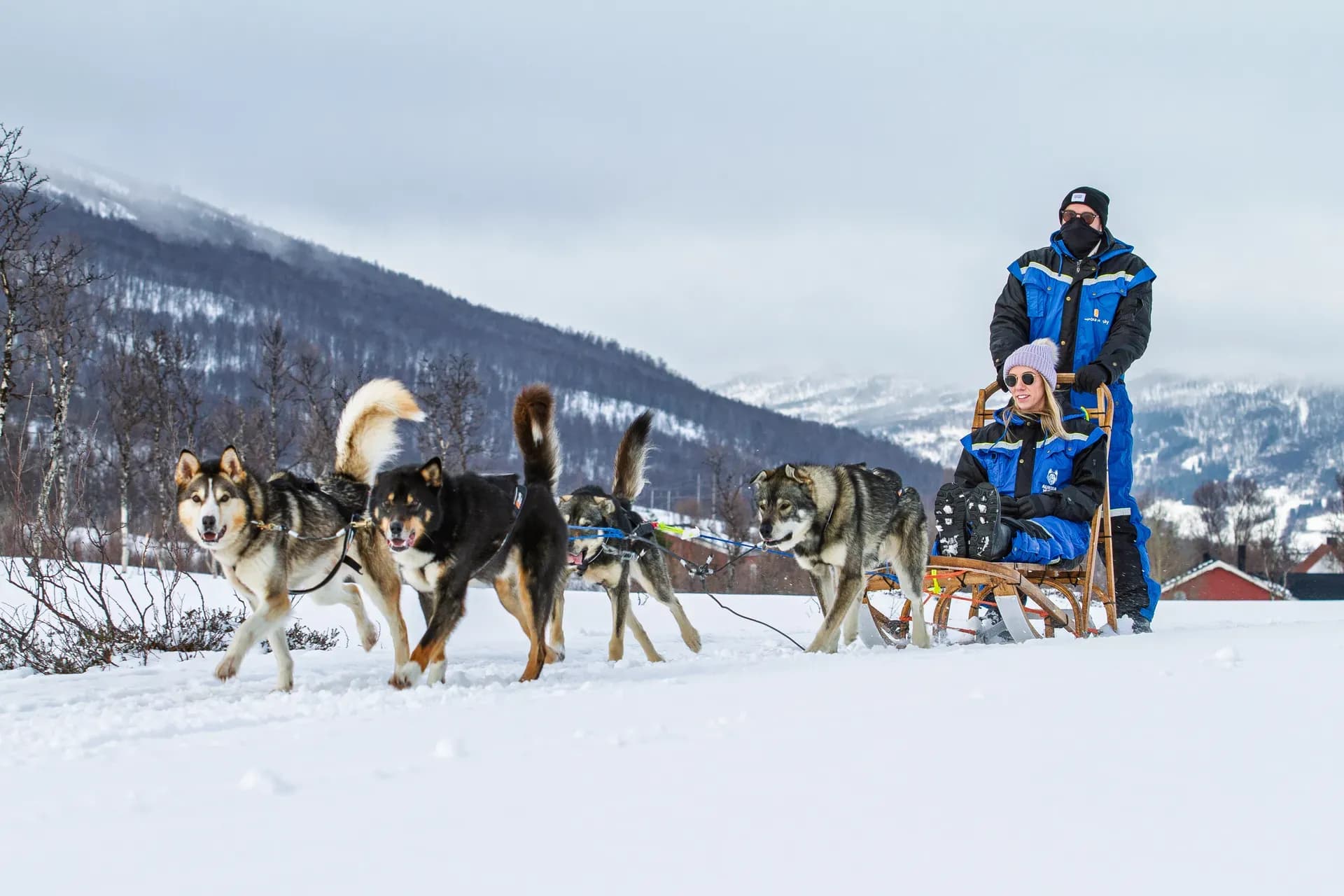
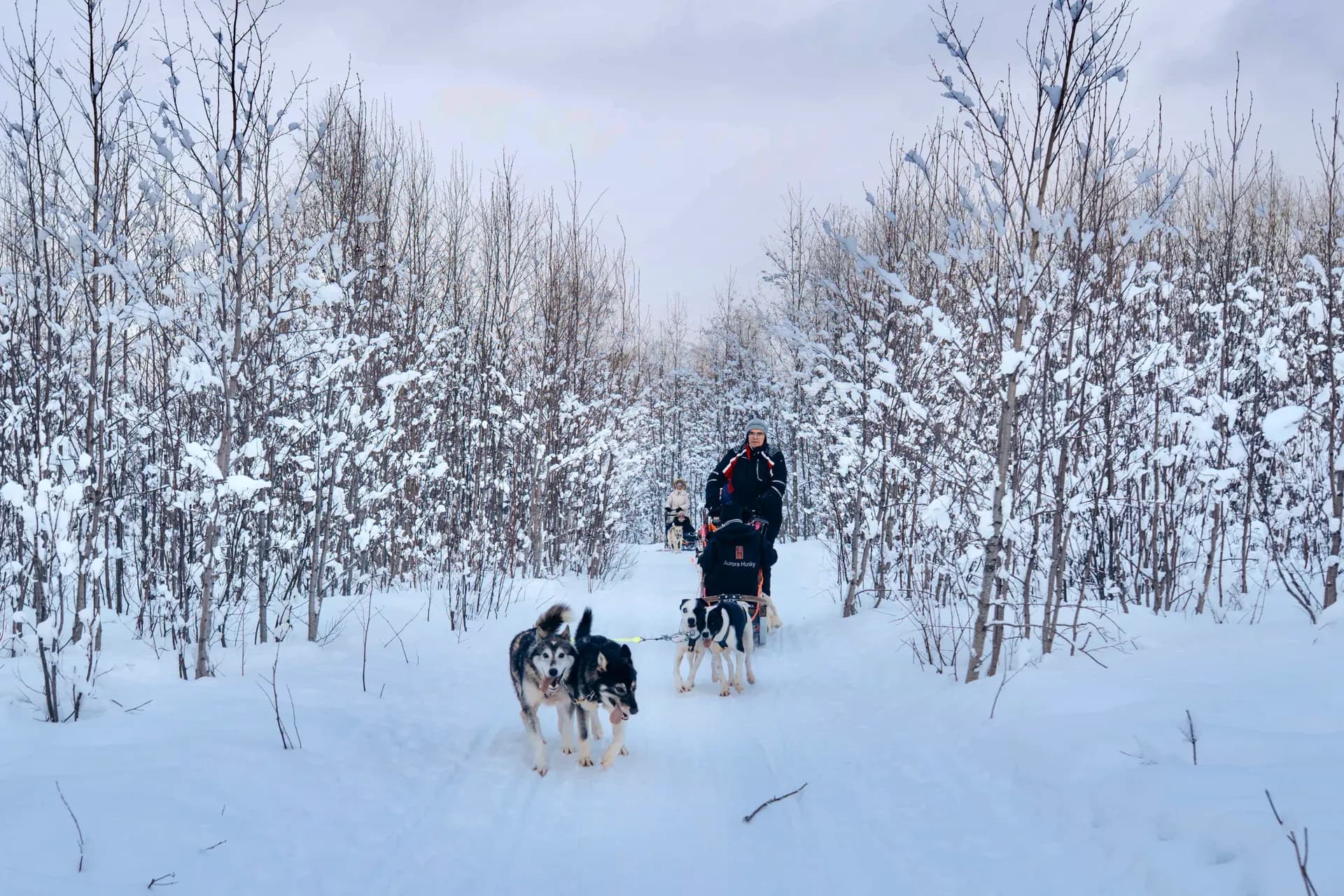
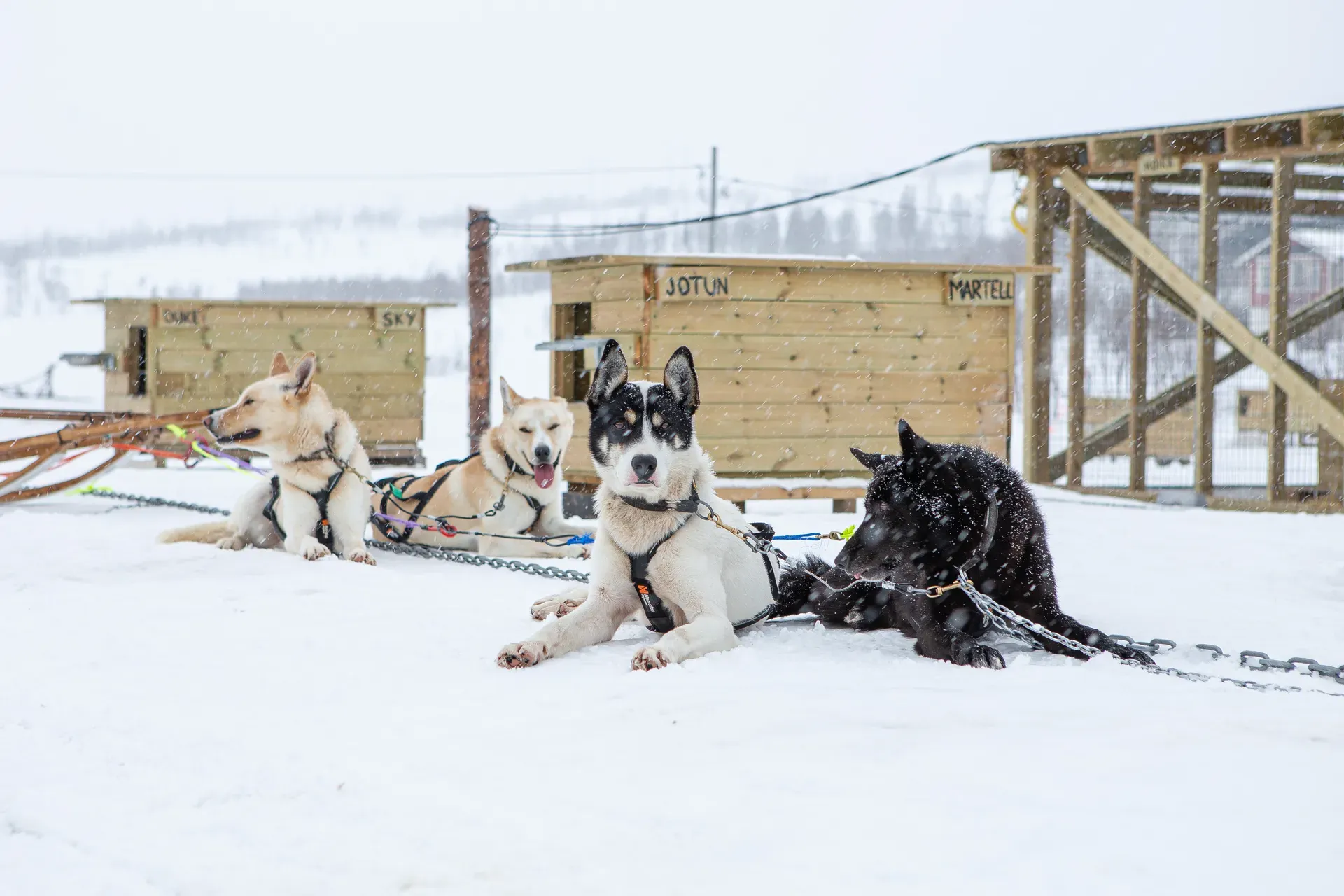
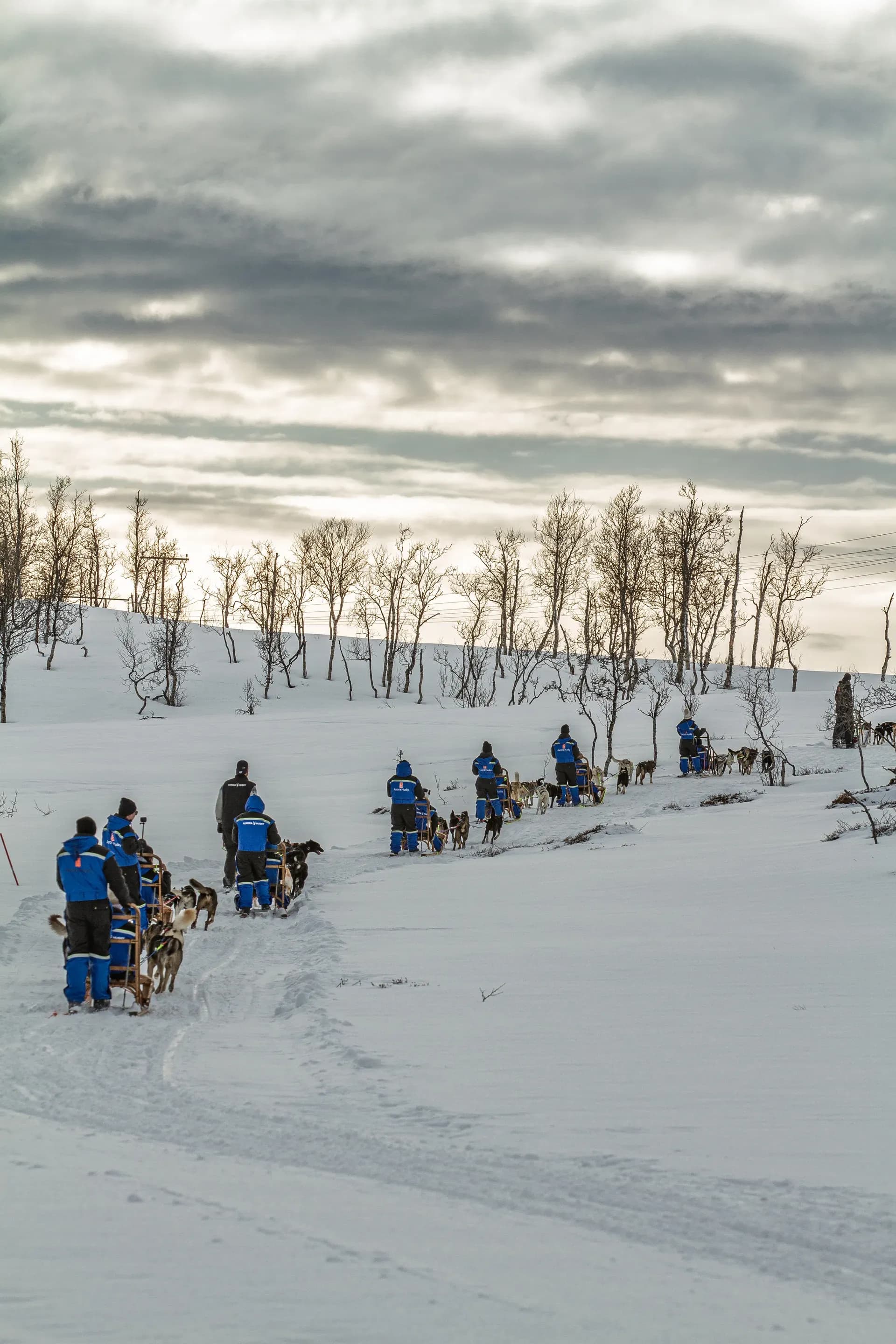
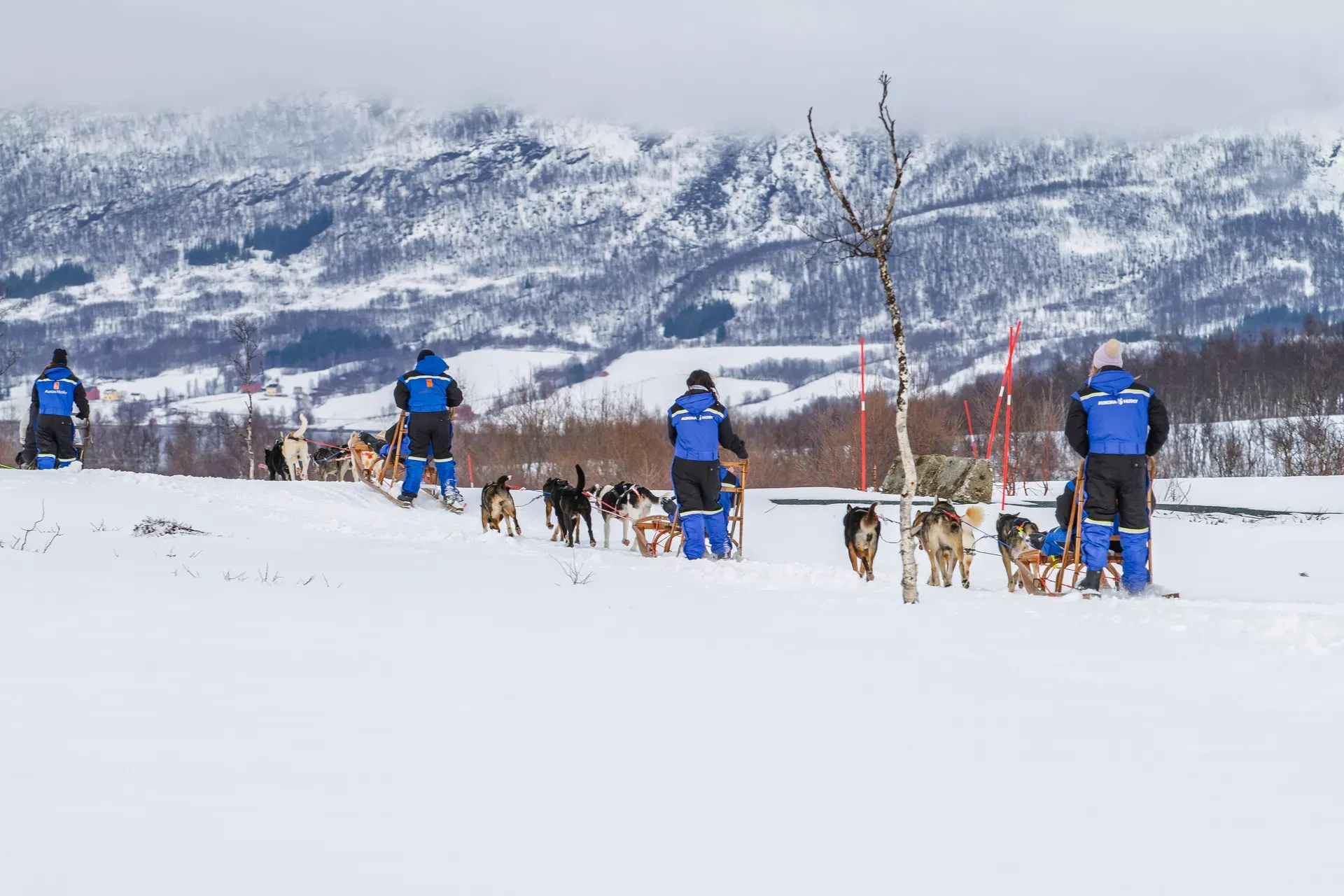
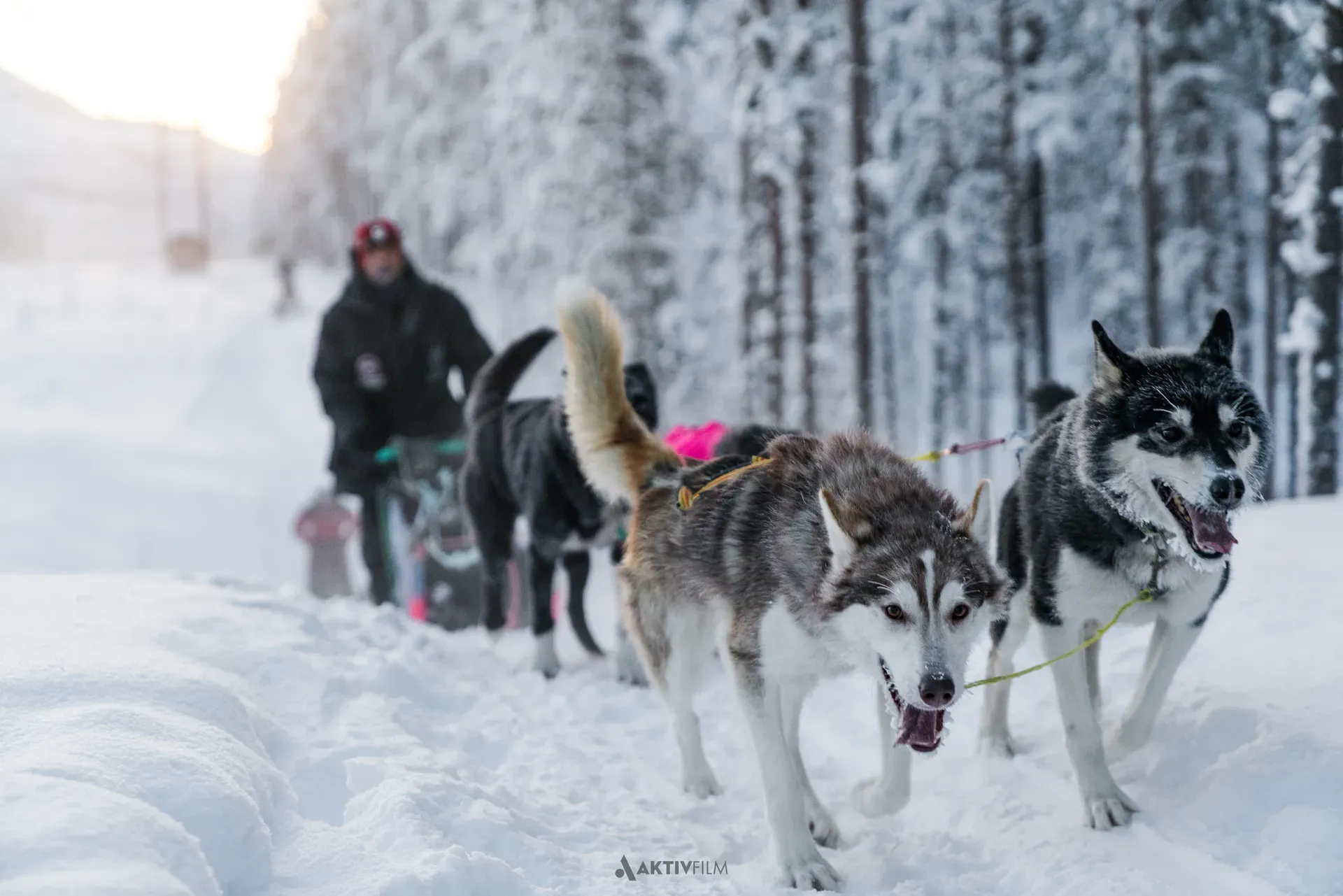
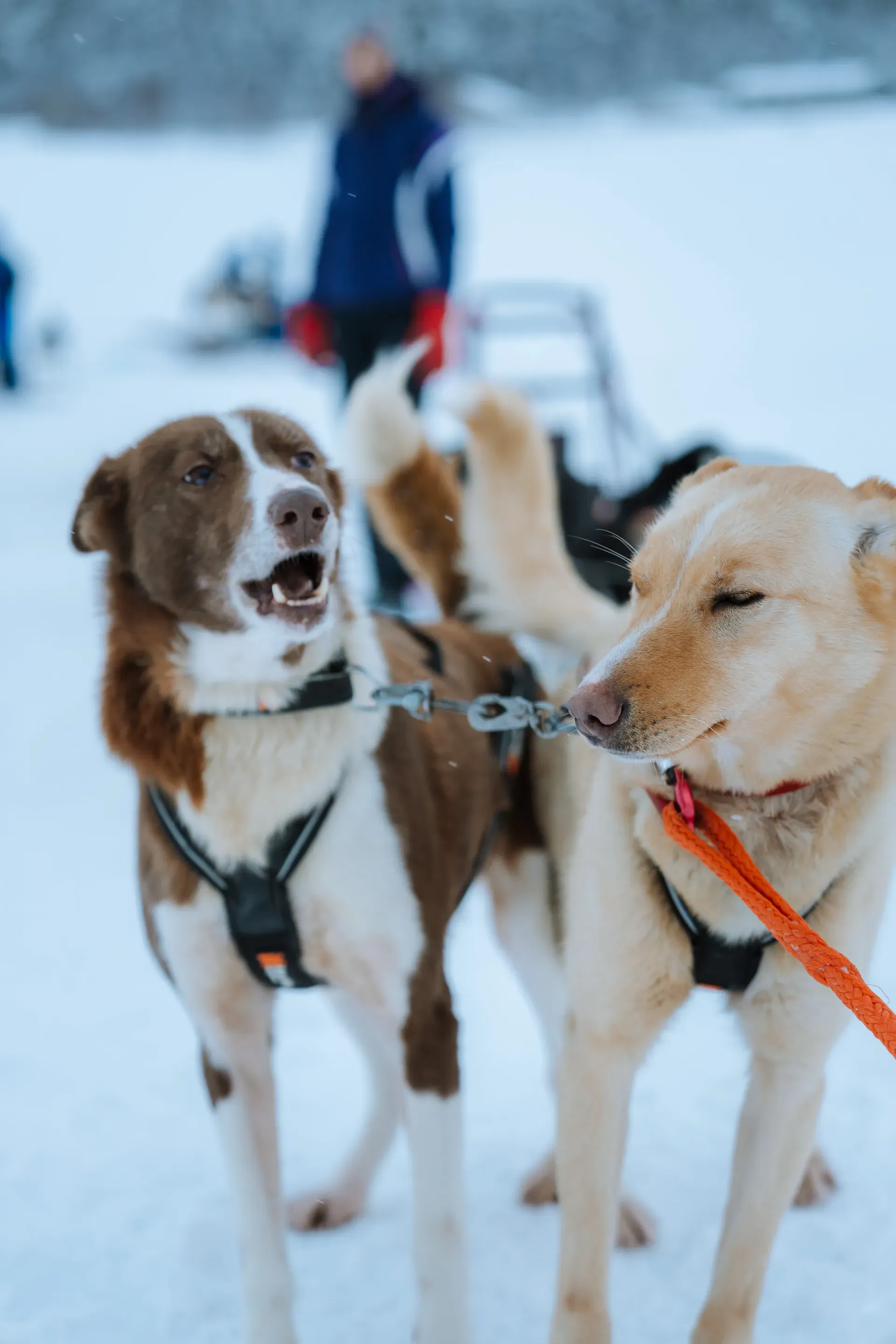
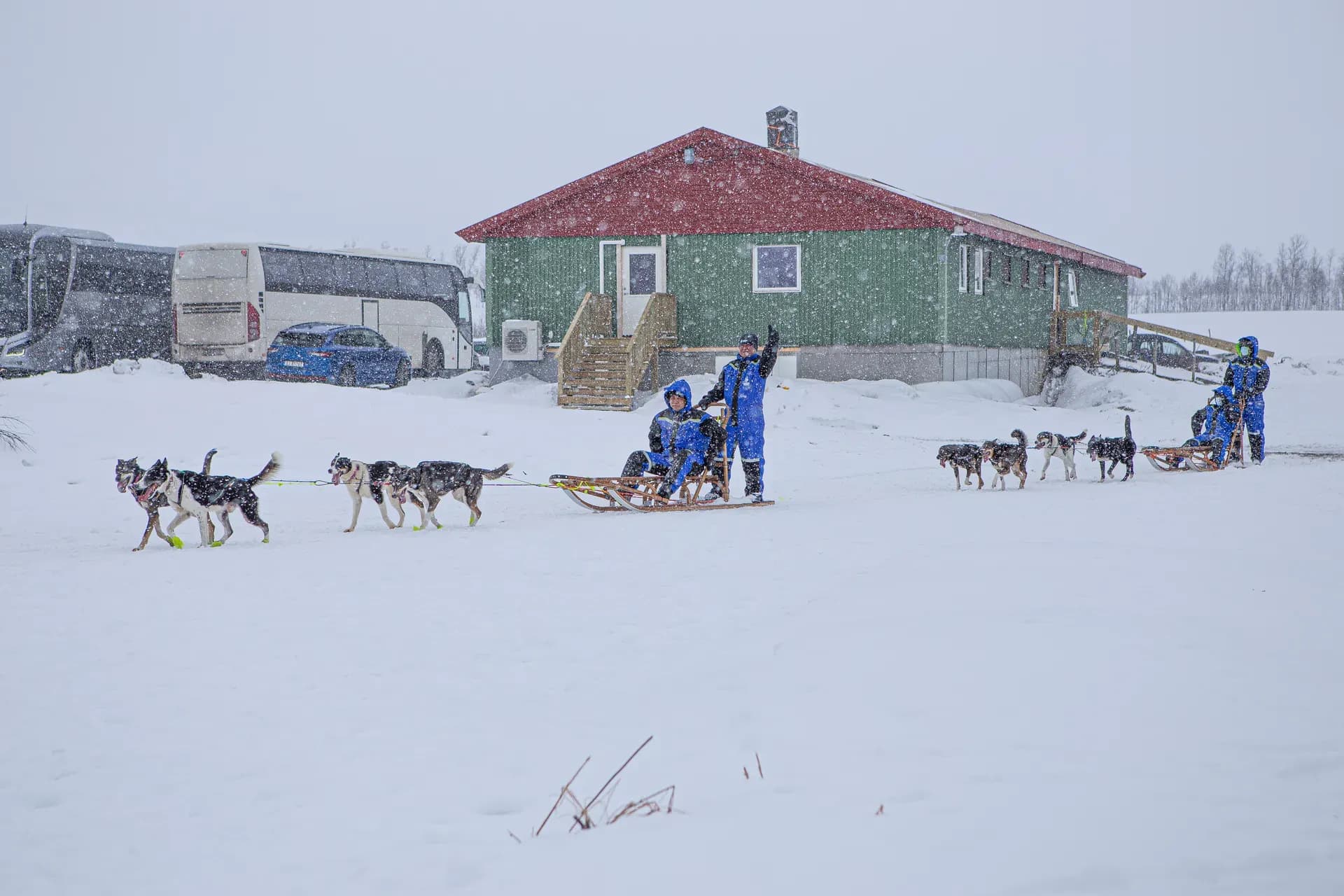
There is a held breath right before a team is released: dogs screaming to go, sled bucking against the snow anchor, driver's knuckles white on the handlebar. Then the brake lifts and the noise stops instantly, because huskies do not waste breath they can spend running. First-time drivers all describe the same thing: the shock of how quiet fast is.
The aurora does not care about forecasts, which is why this photo exists and several hundred colder attempts do not. When the sky above Breivikeidet finally moves, the camp does the same thing every time: lights off, voices down, cameras up. The dogs sleep through it. To them it is just weather that doesn't even fall.
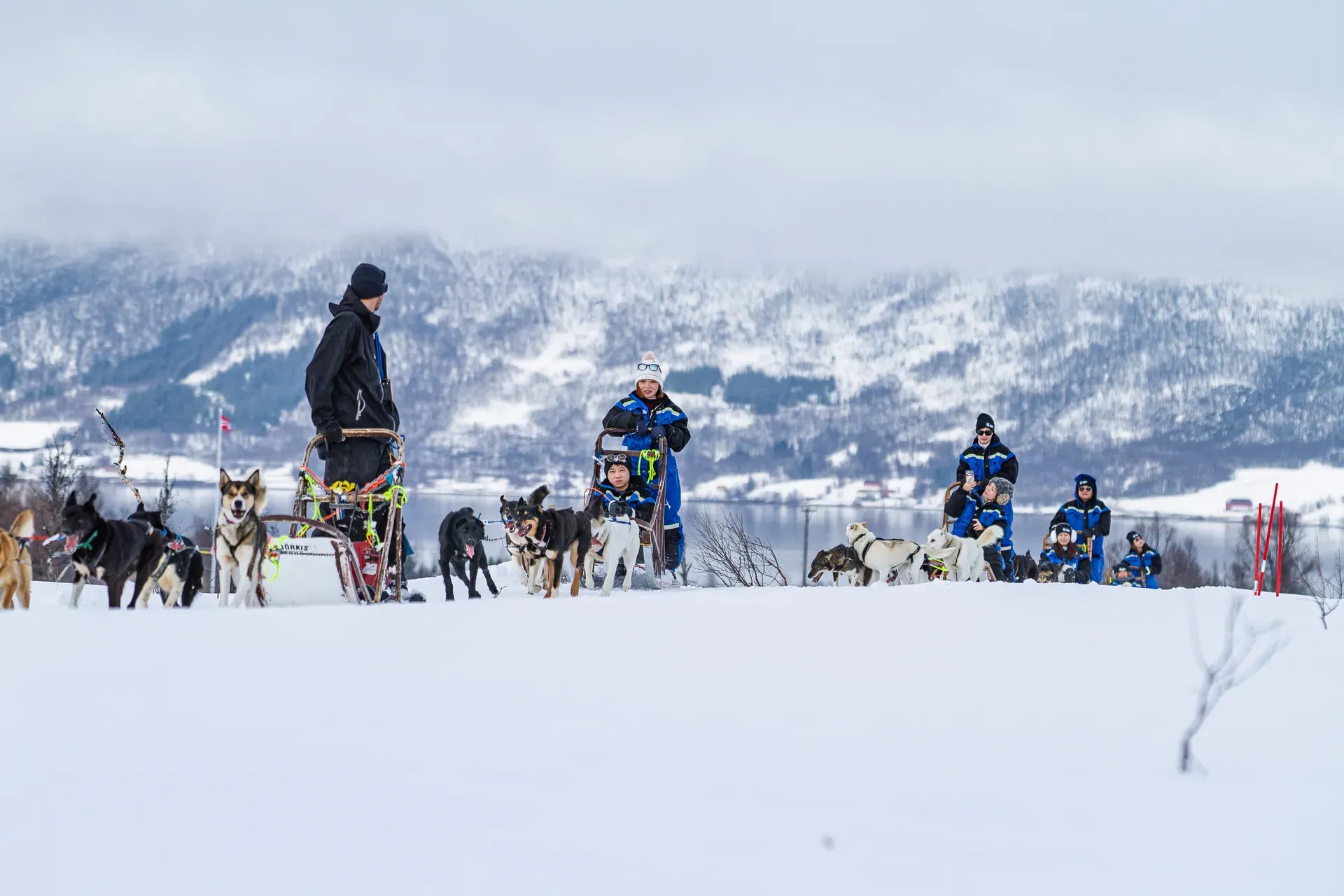
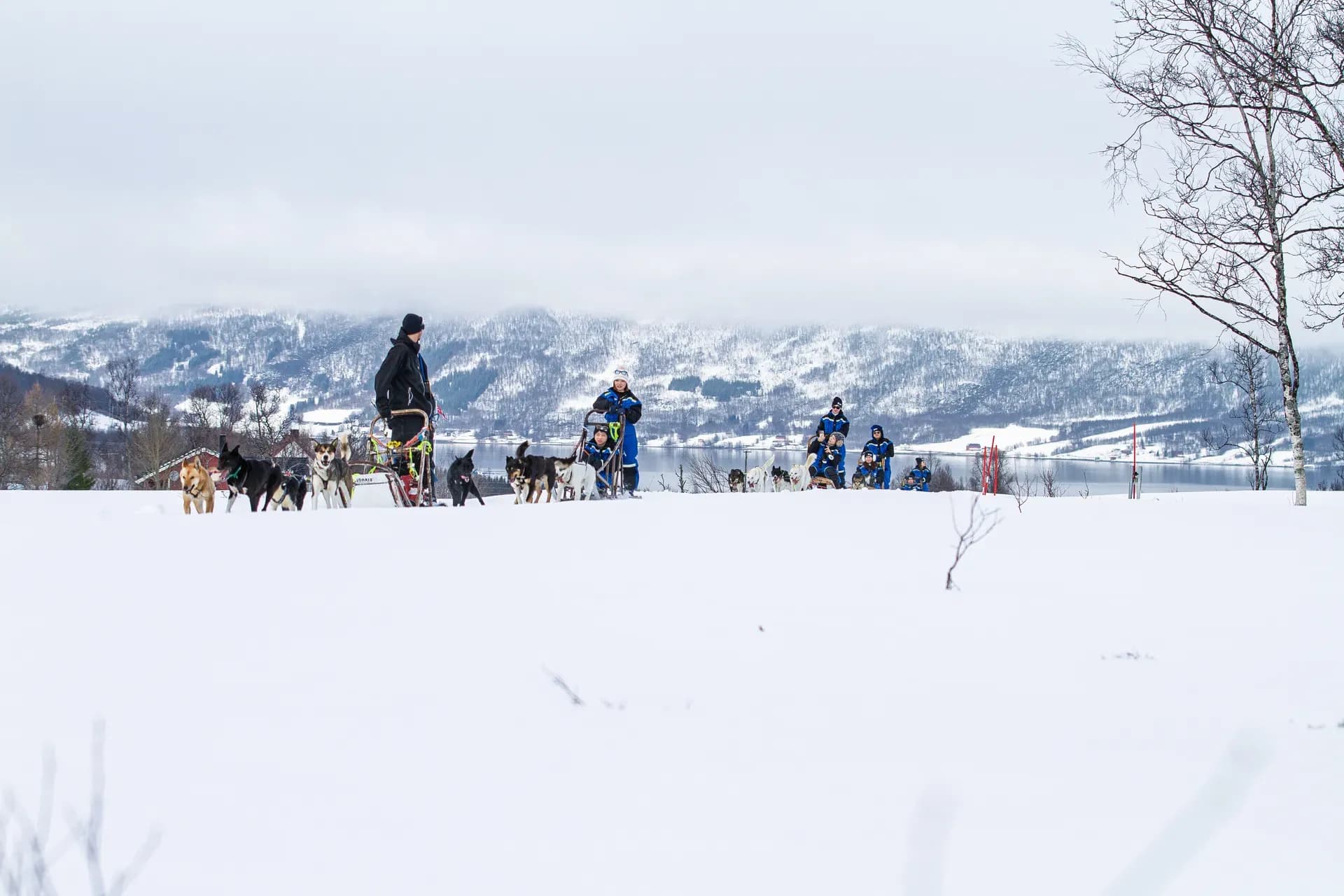
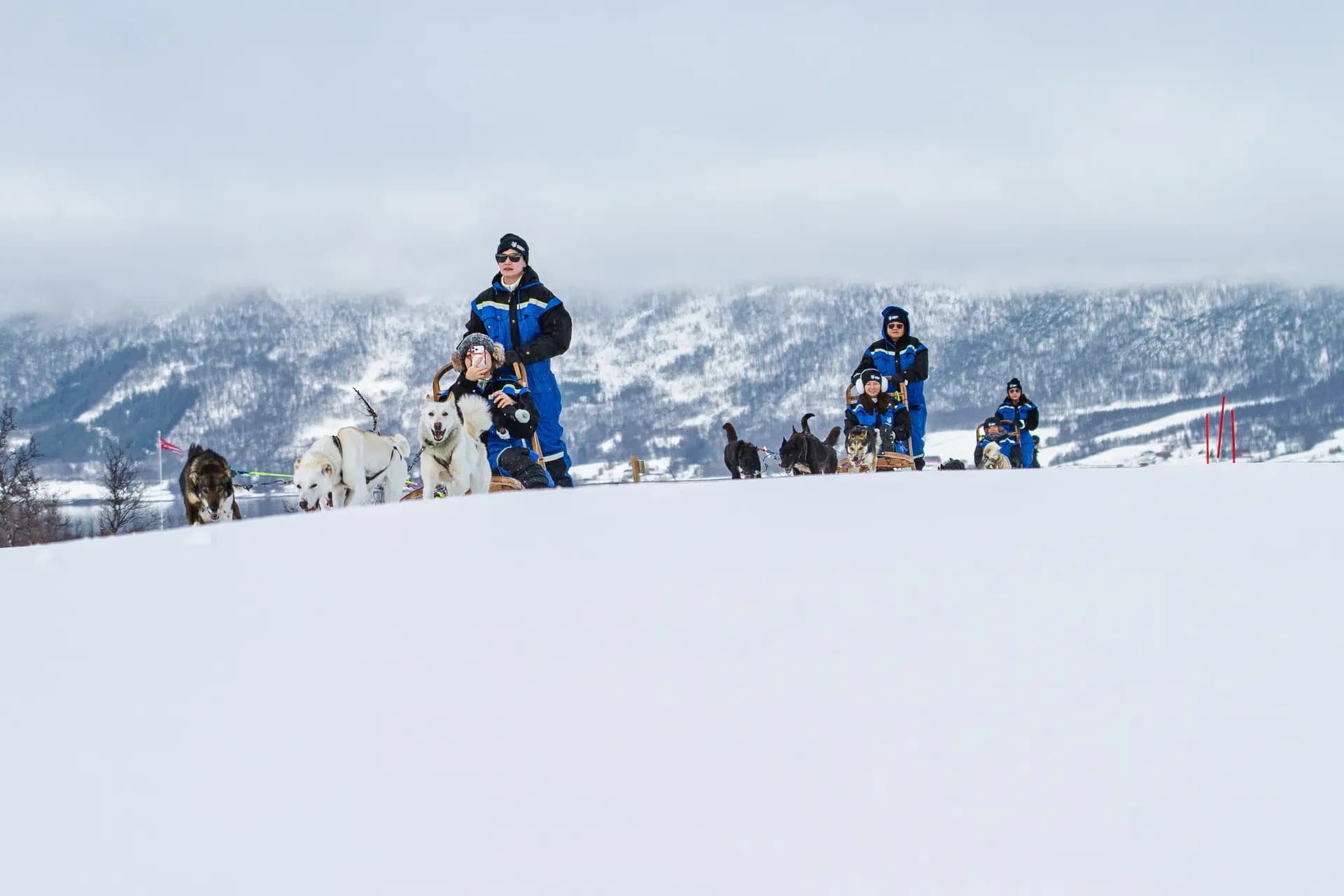
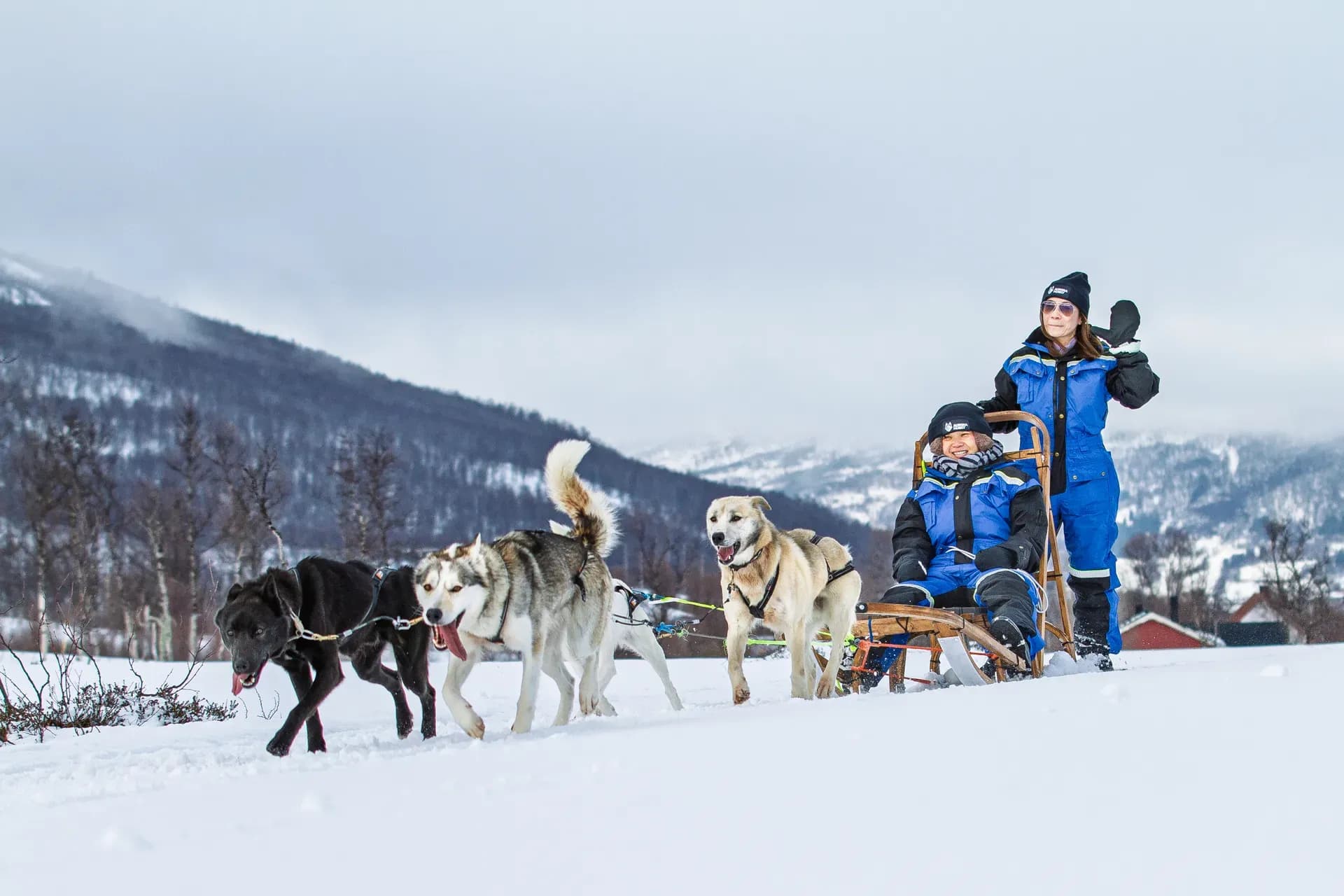
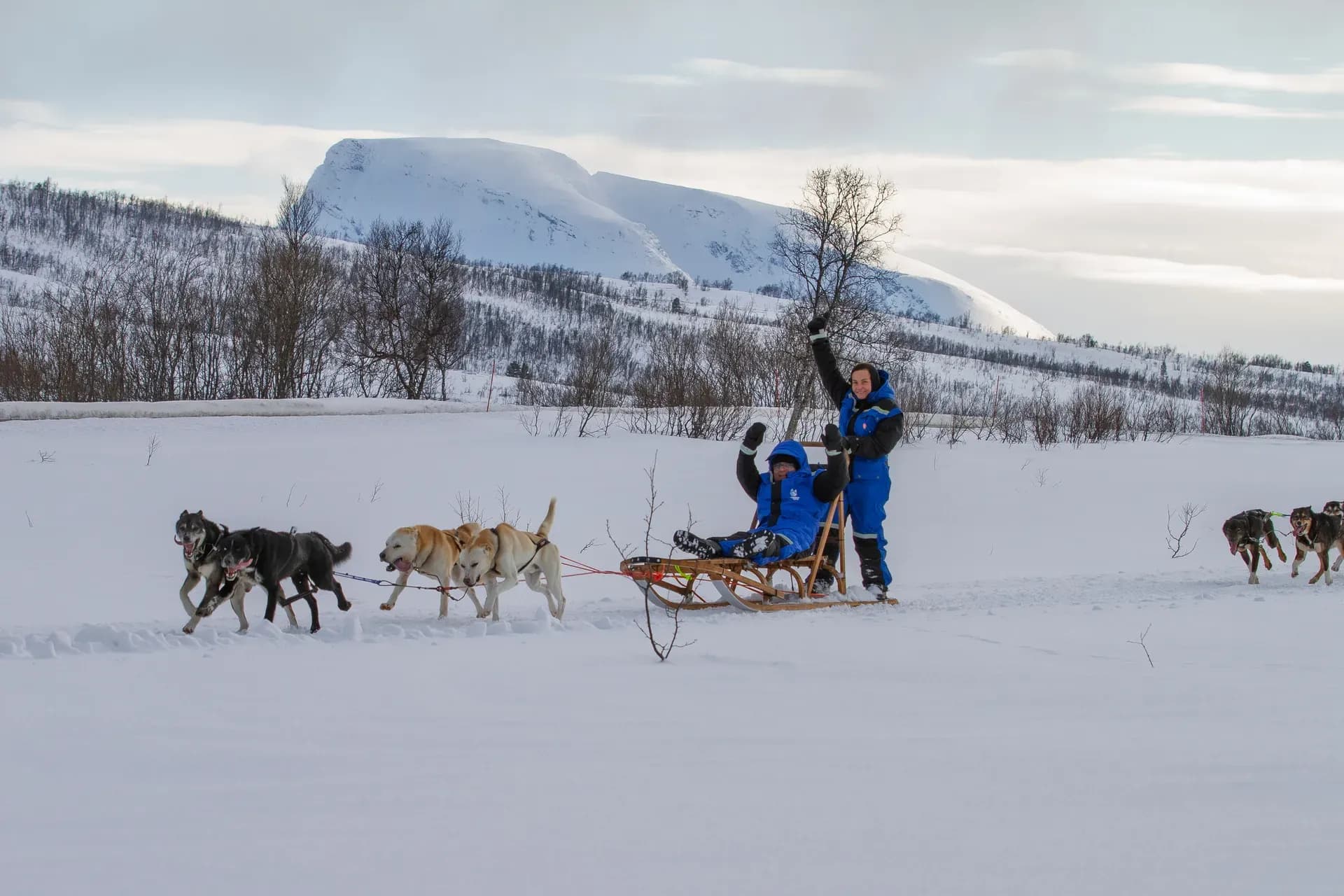
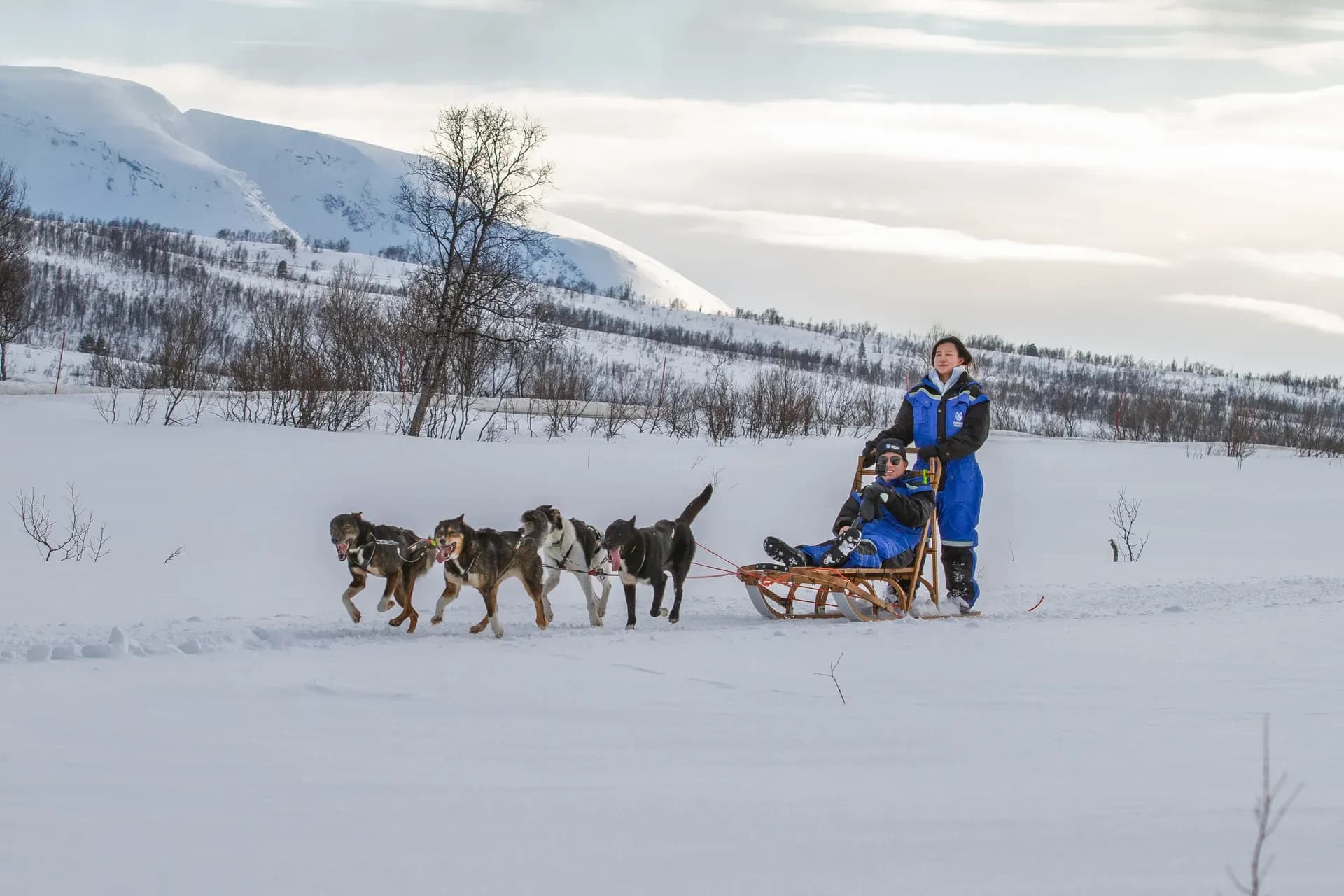
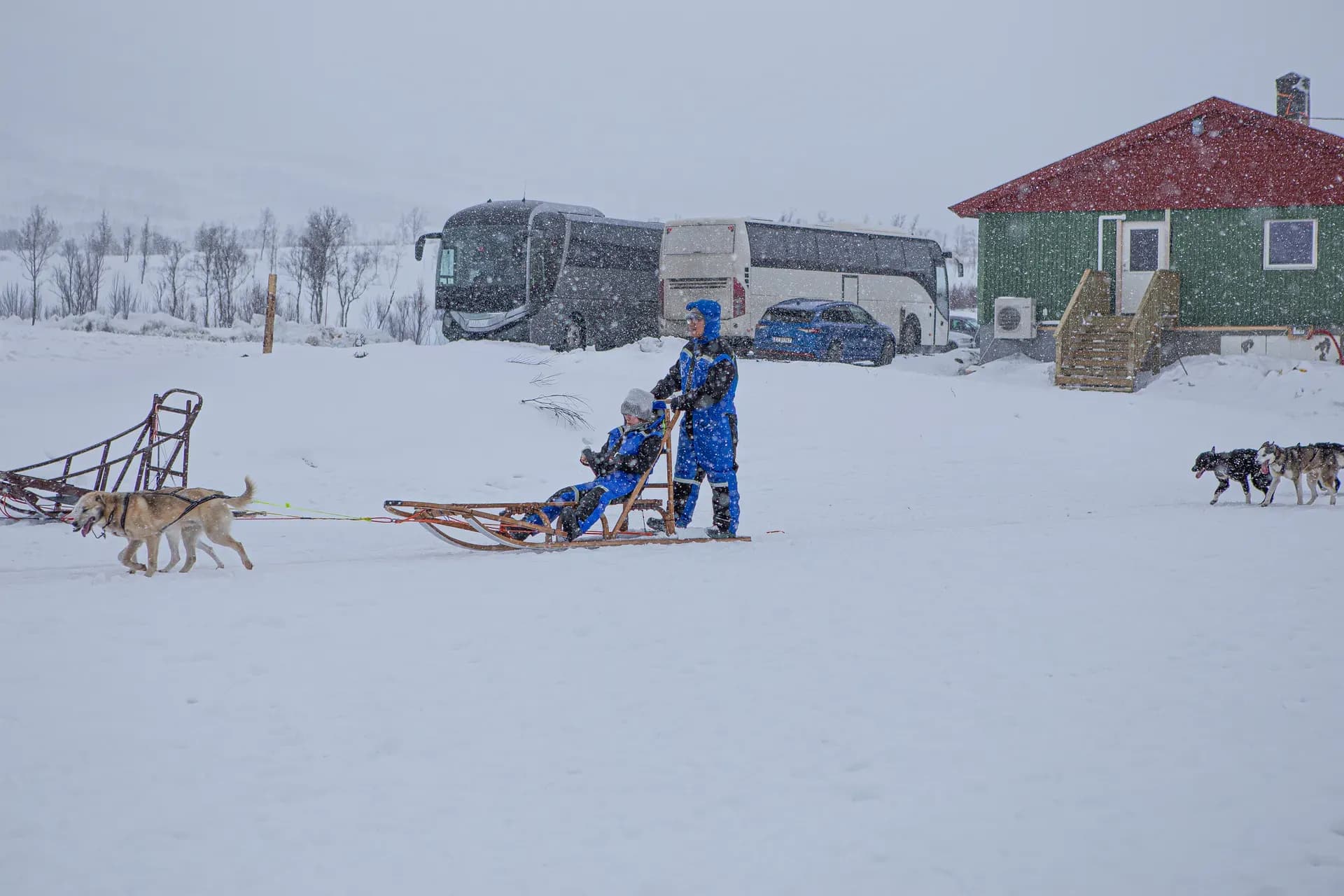
This is the face of a person who, one hour earlier, asked whether the dogs were "hard to steer". Now she is two kilometres into her first drive, the team has settled into its long trot, and something in her posture has changed from holding on to driving. Our favourite part of every tour happens at this exact minute, and no, we never get tired of photographing it.
Retired from harness, not from duty. Every dog yard has one or two like him: a veteran who has run more kilometres than anyone can count and now holds a consulting role, supervising feeding time, correcting puppy manners with a single look, occupying the sunniest spot by seniority. Guests ask what happens to sled dogs when they get old. Mostly, this. He happens to it.
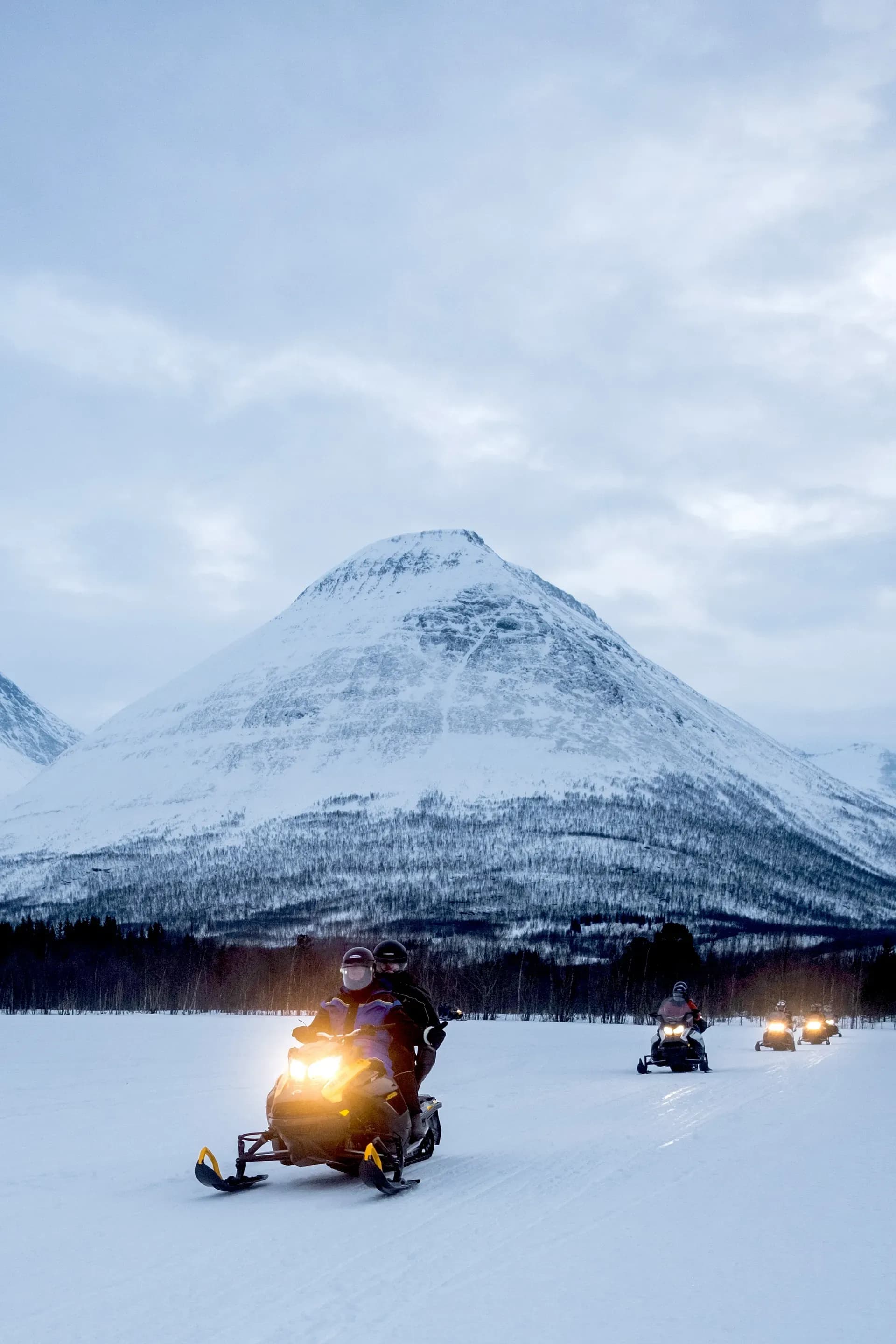
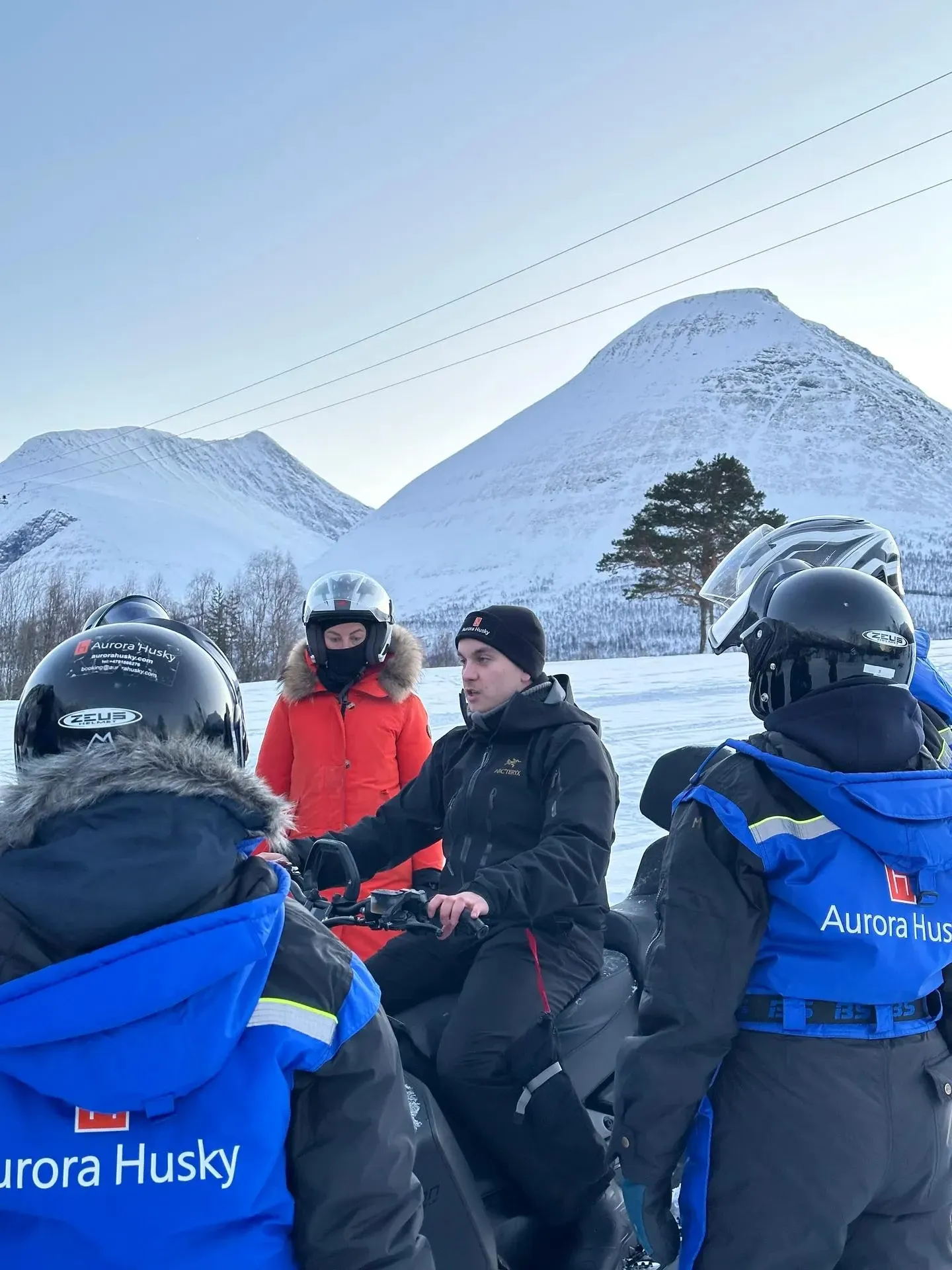
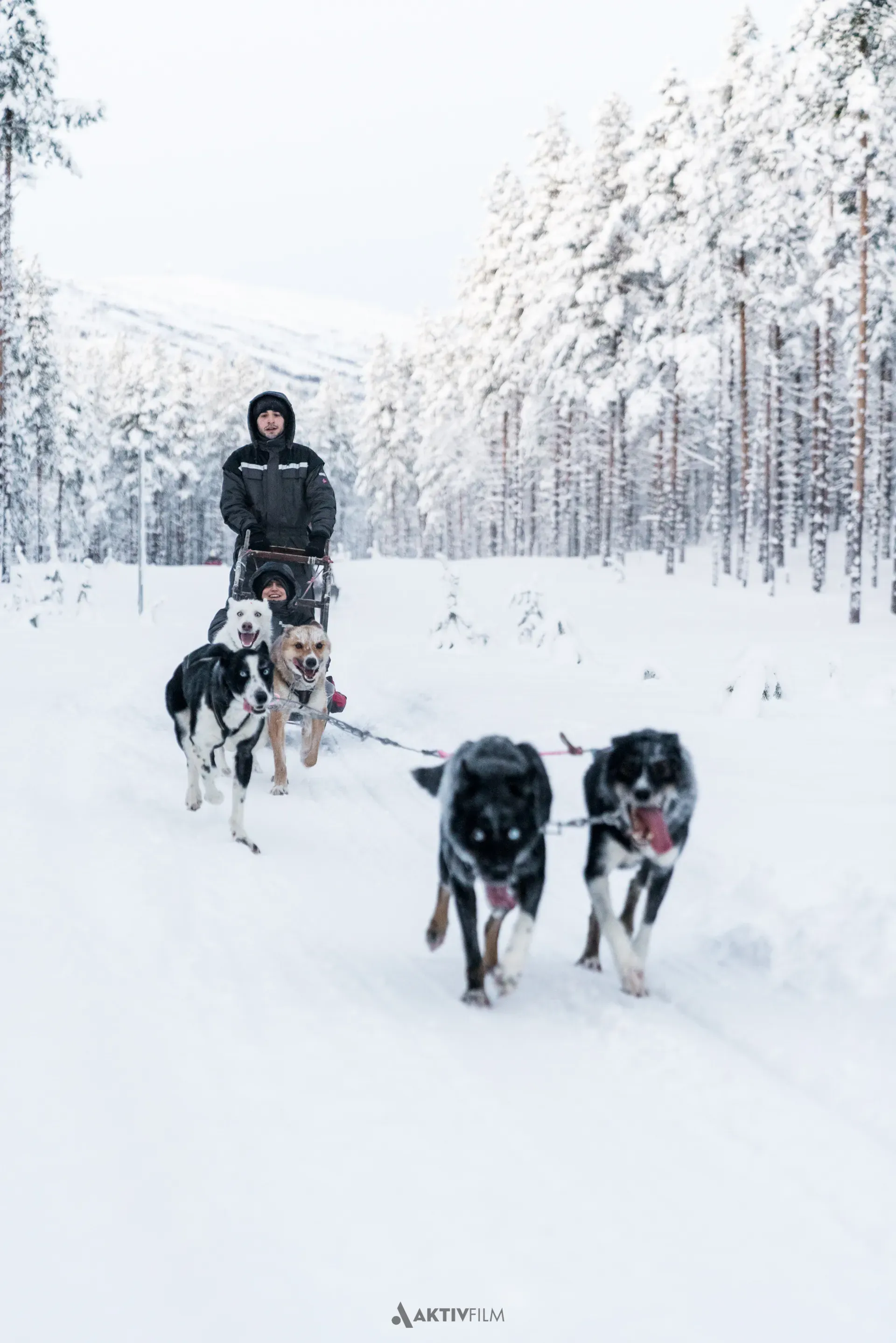
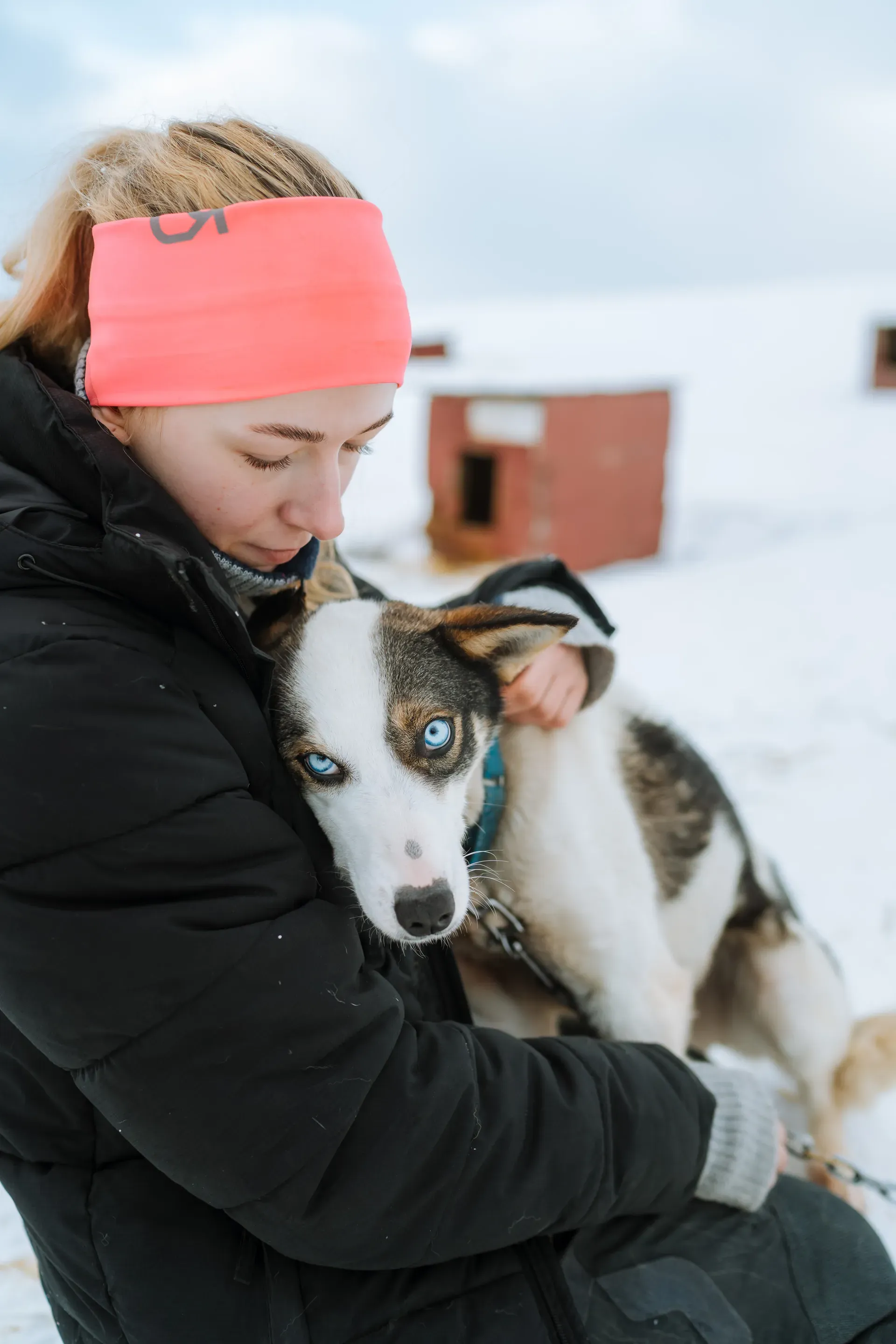
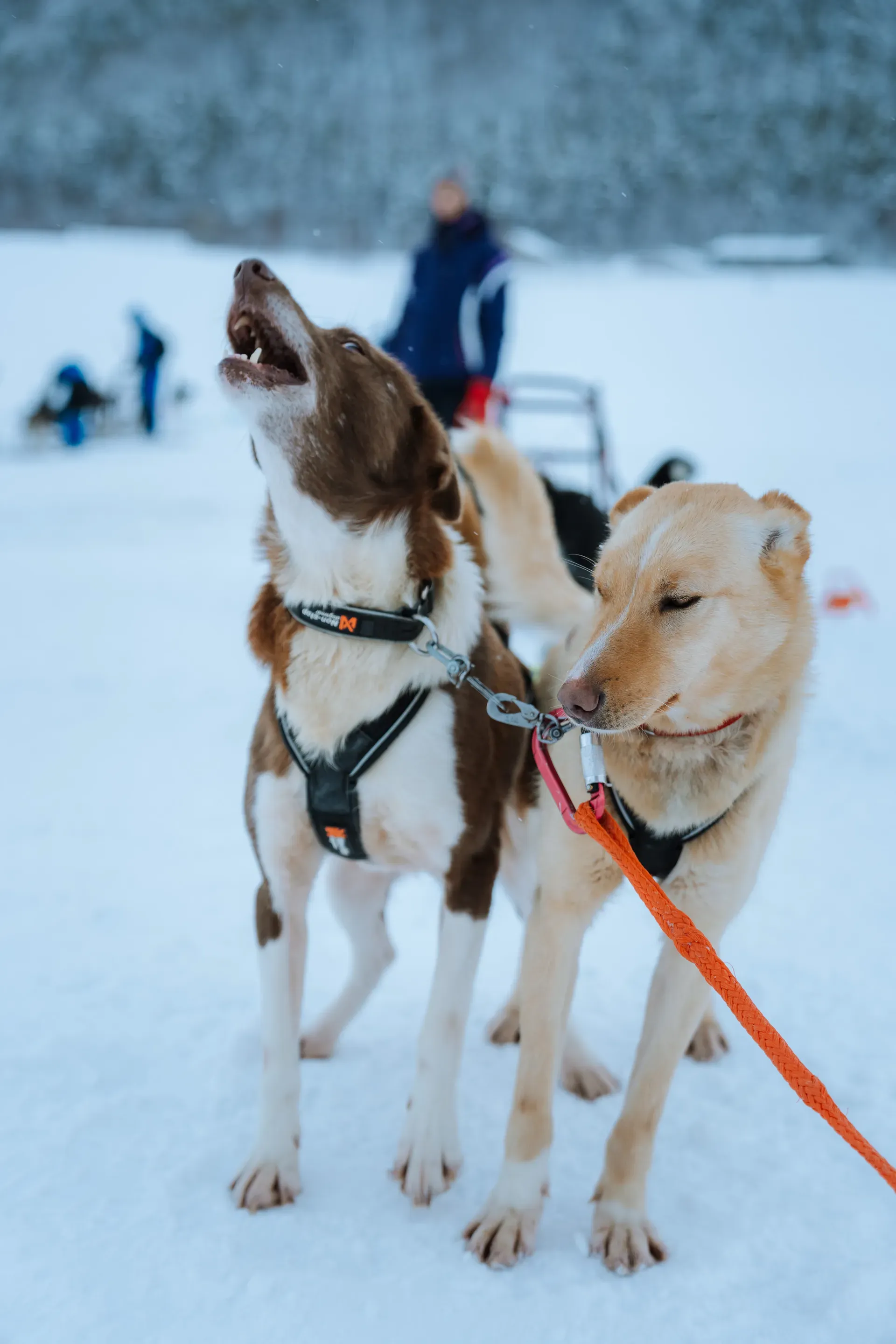
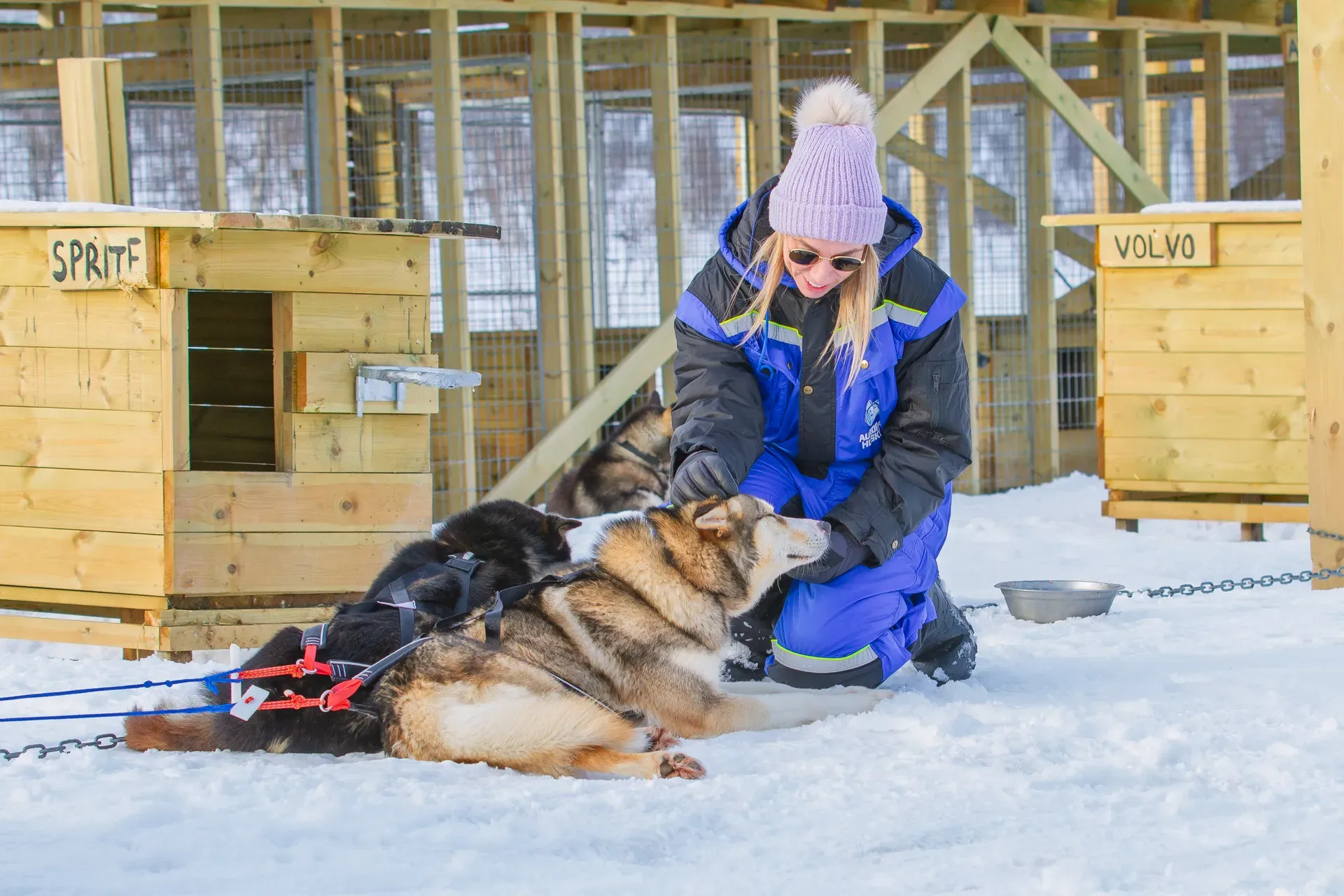
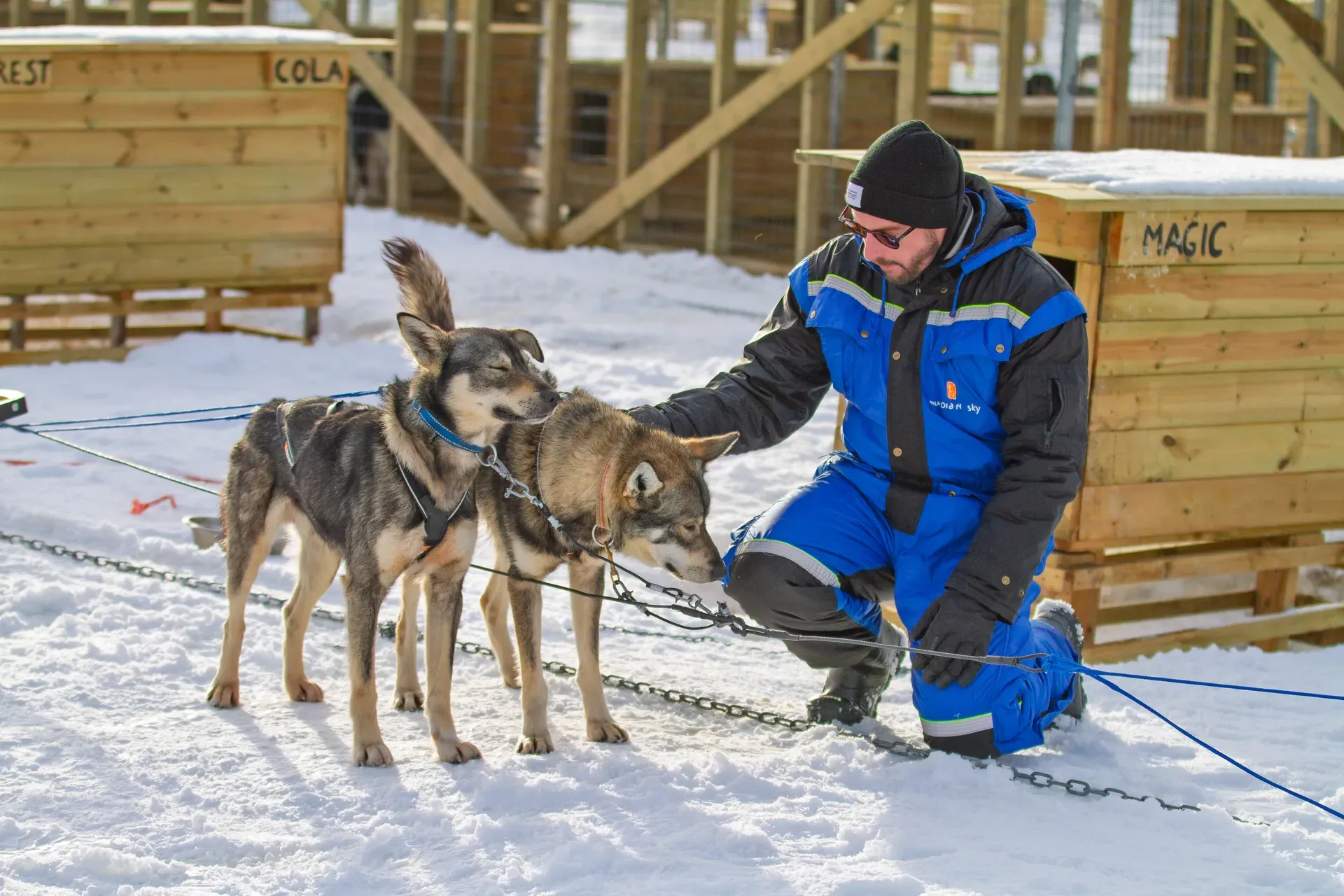
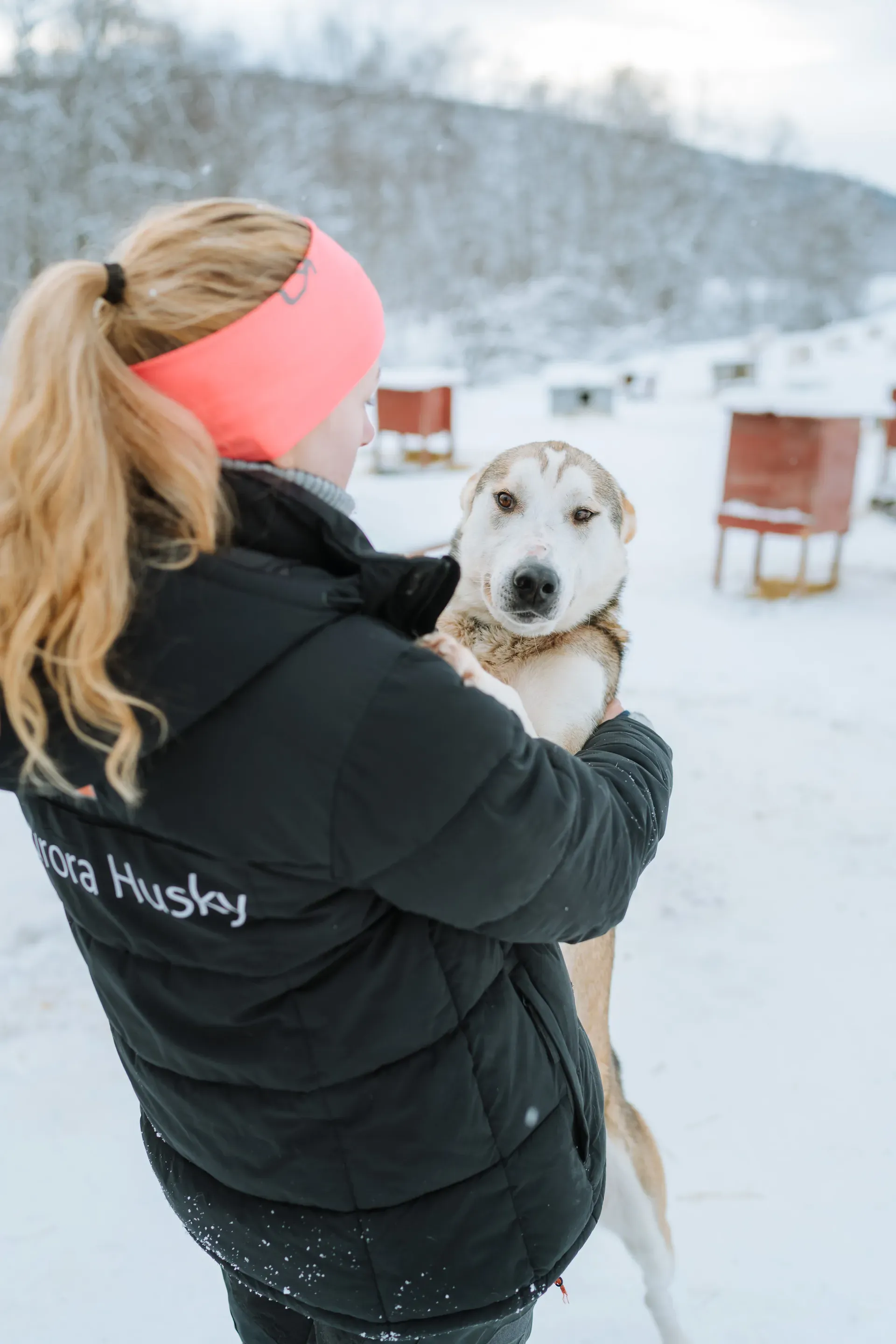
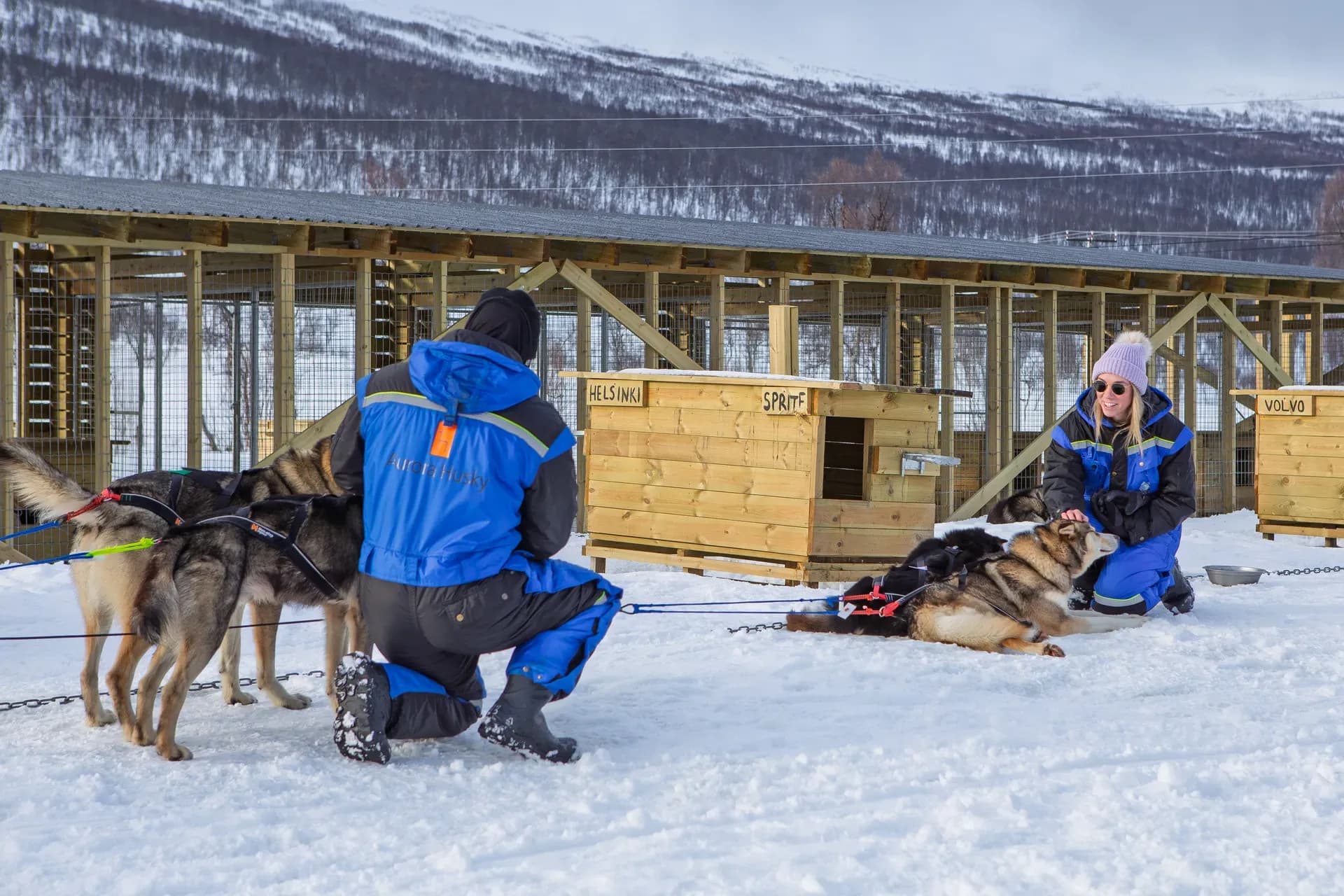
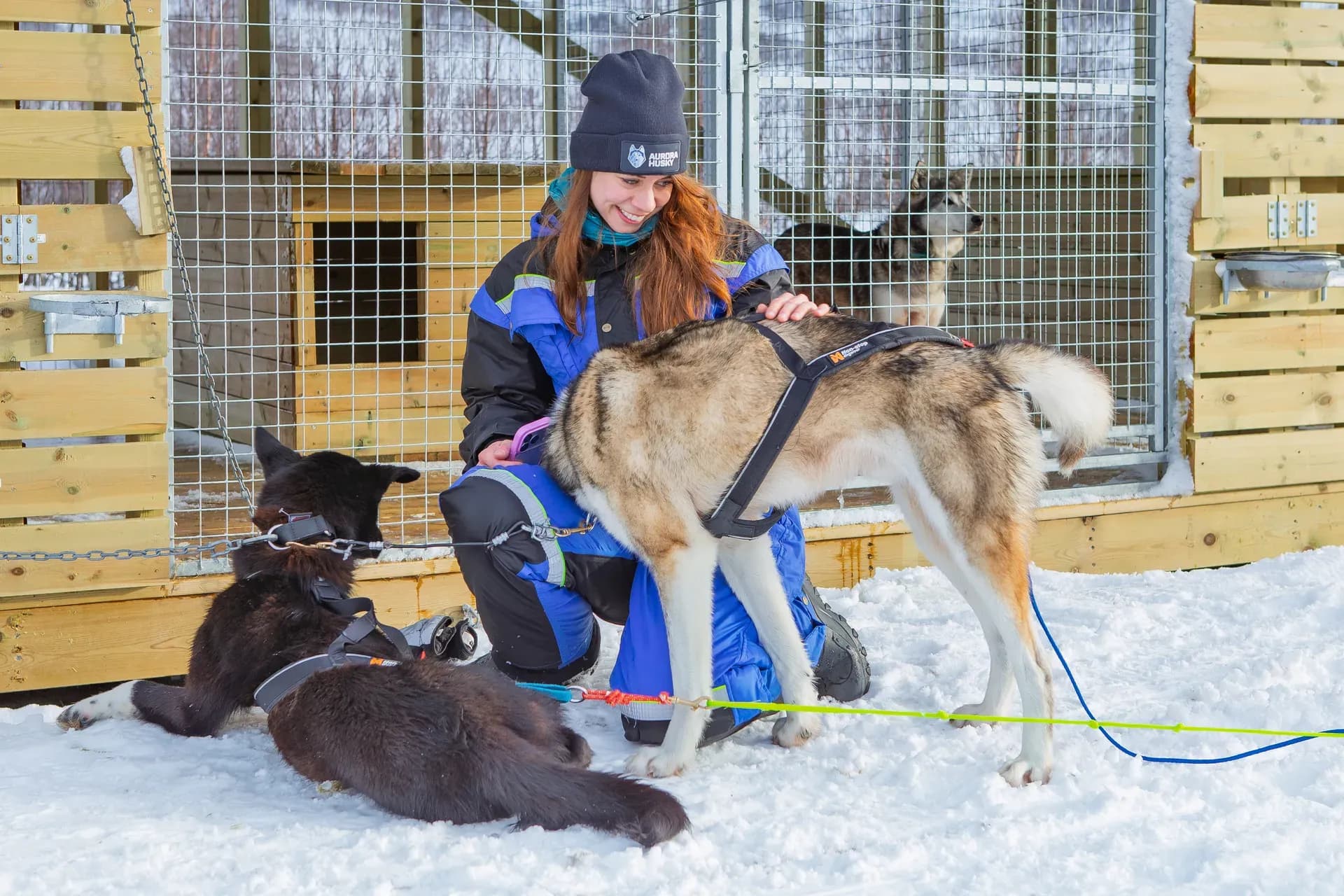
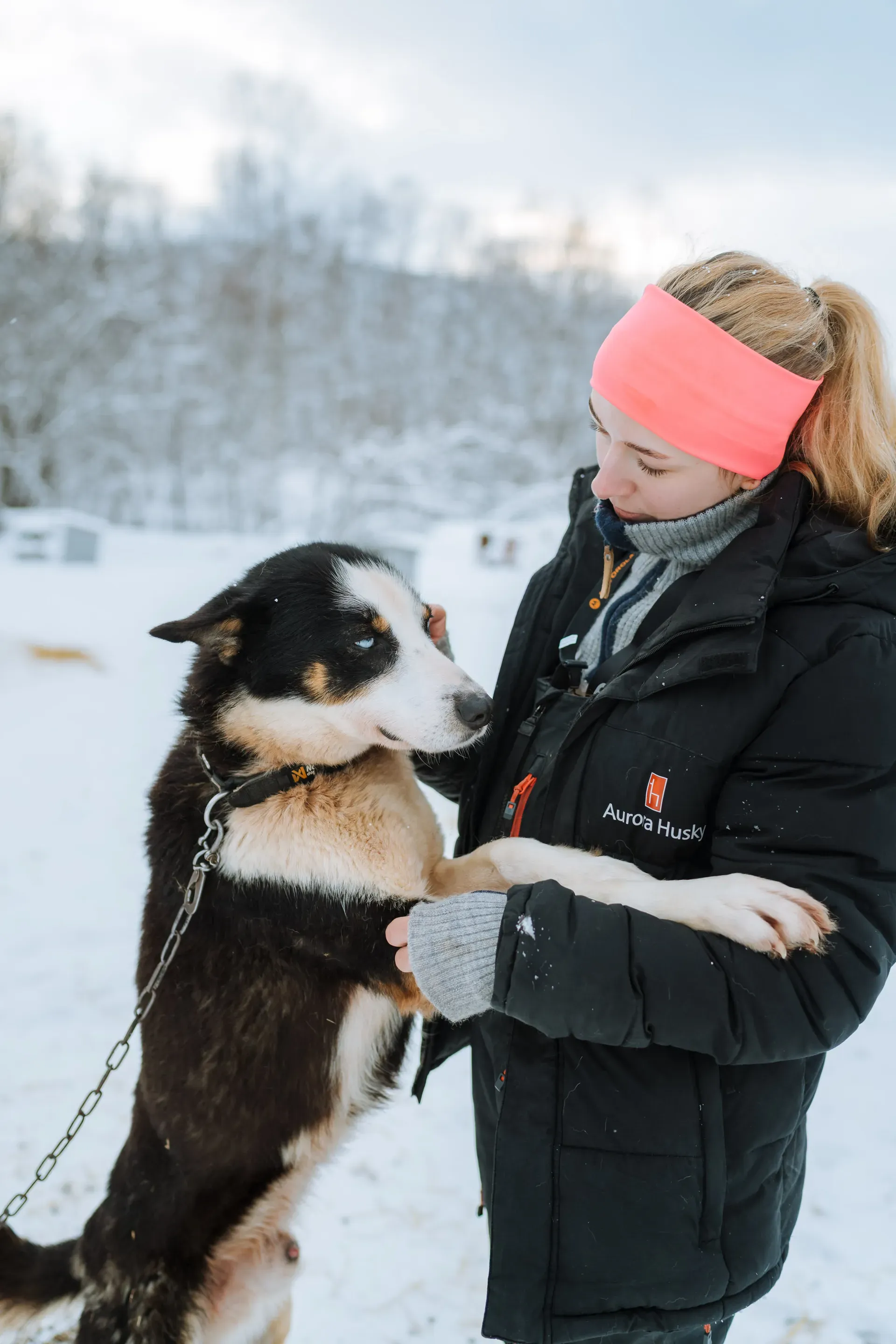
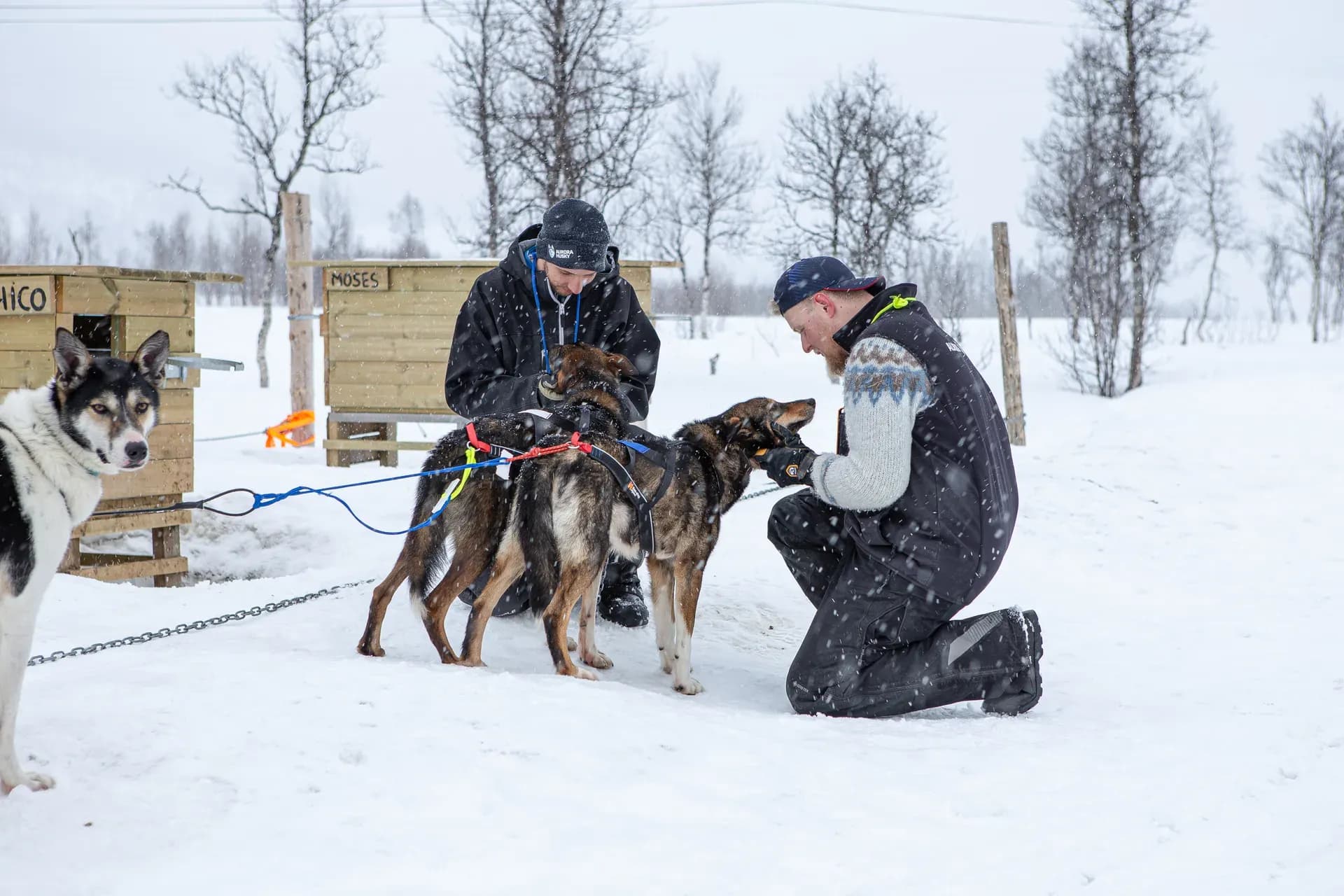
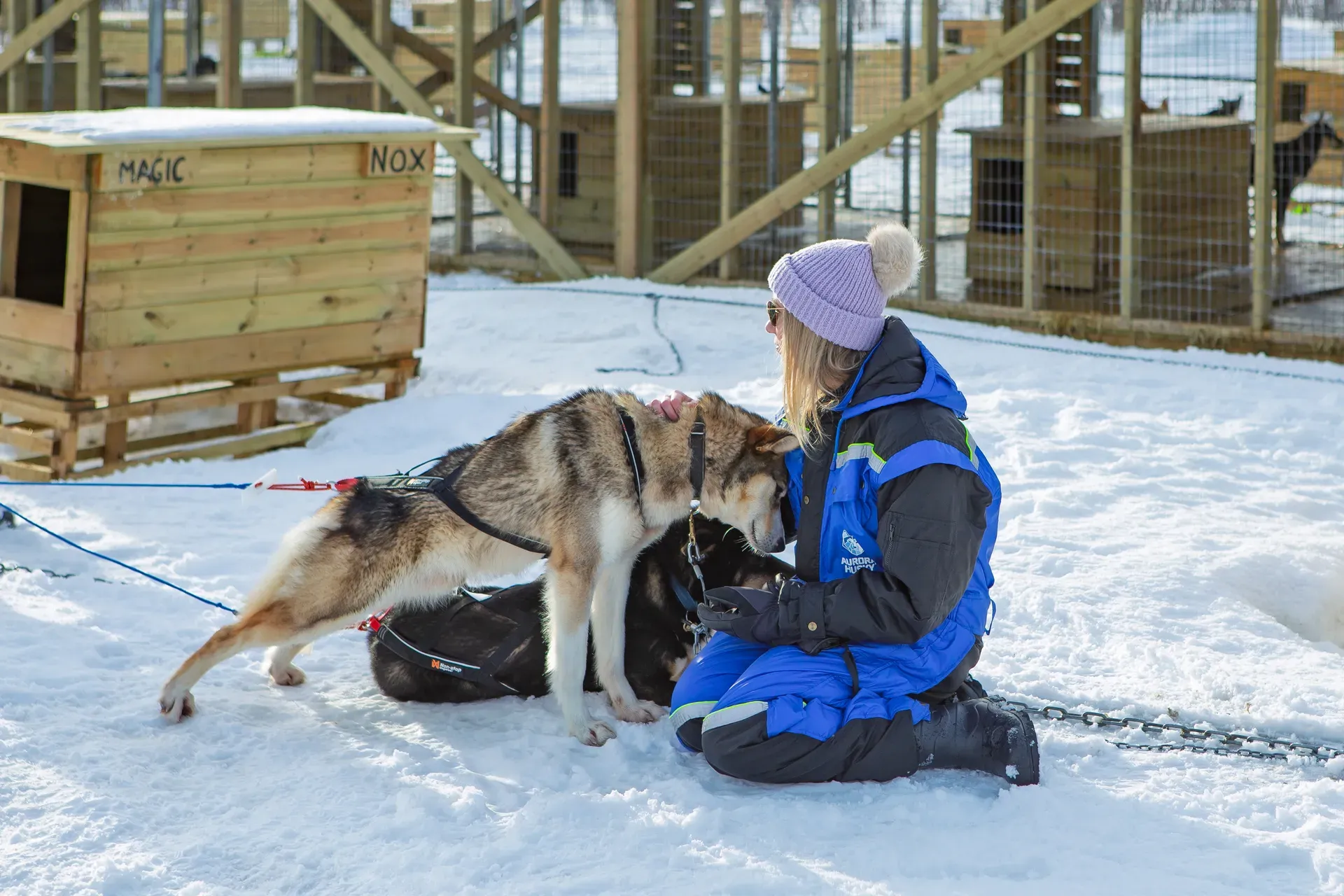
Watch a musher greet a team after a run and you will see the same ritual, dog after dog: hello, ears, then paws, one at a time. Feet are everything to a sled dog, so feet get checked before breakfast and after every tour, and the camp goes through more paw balm than coffee. It is a small, repetitive, unglamorous job, which is exactly what care looks like most of the time.
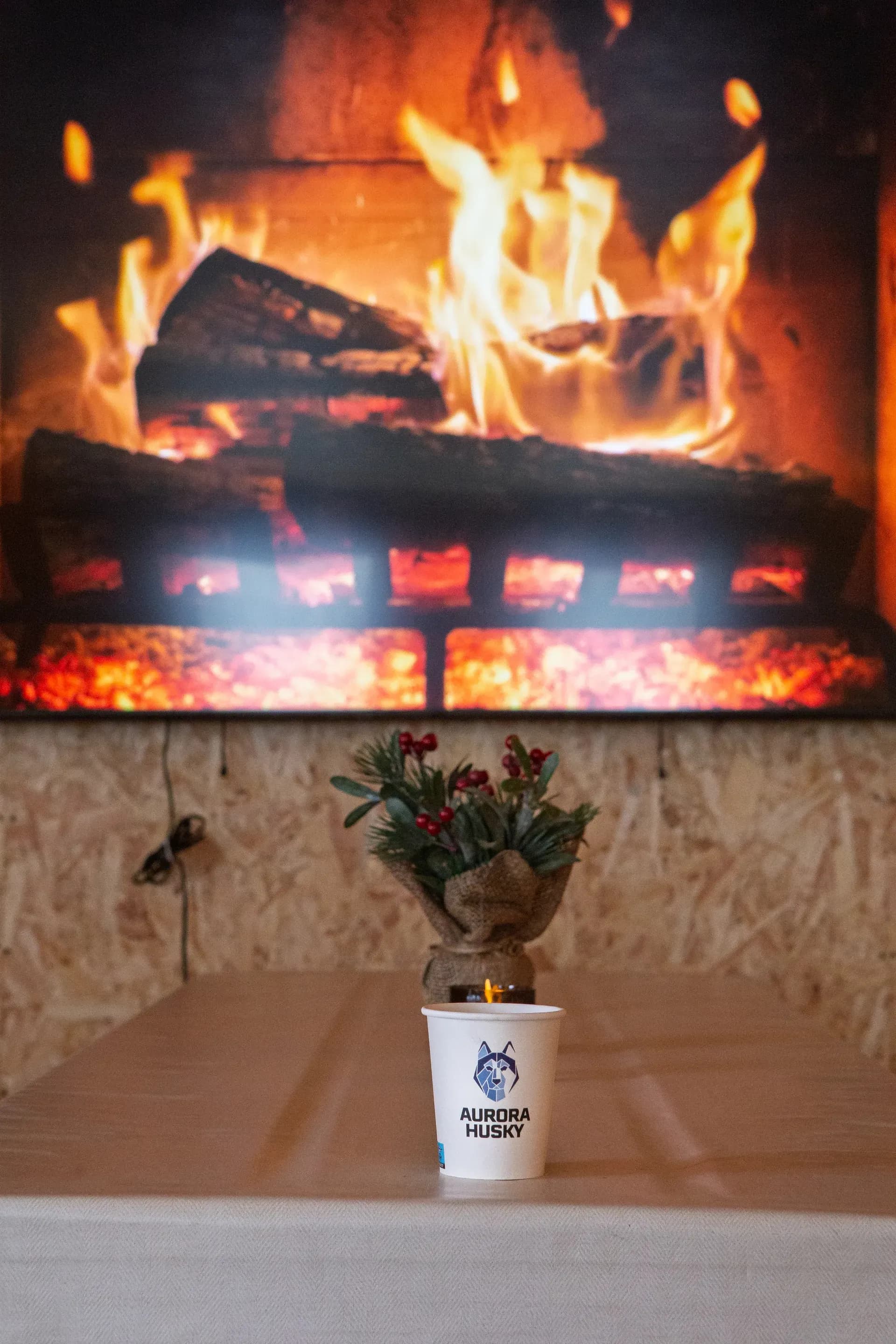
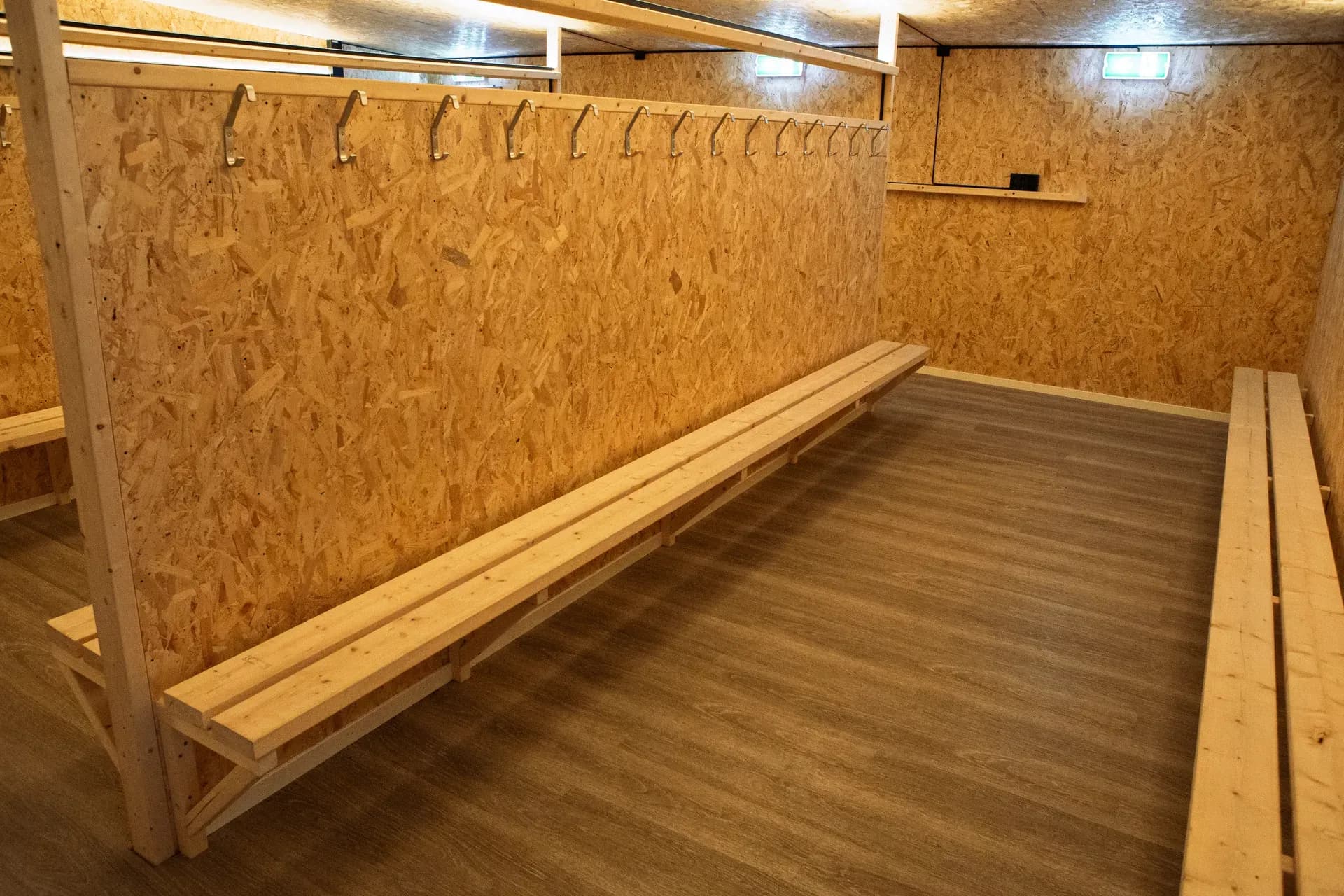
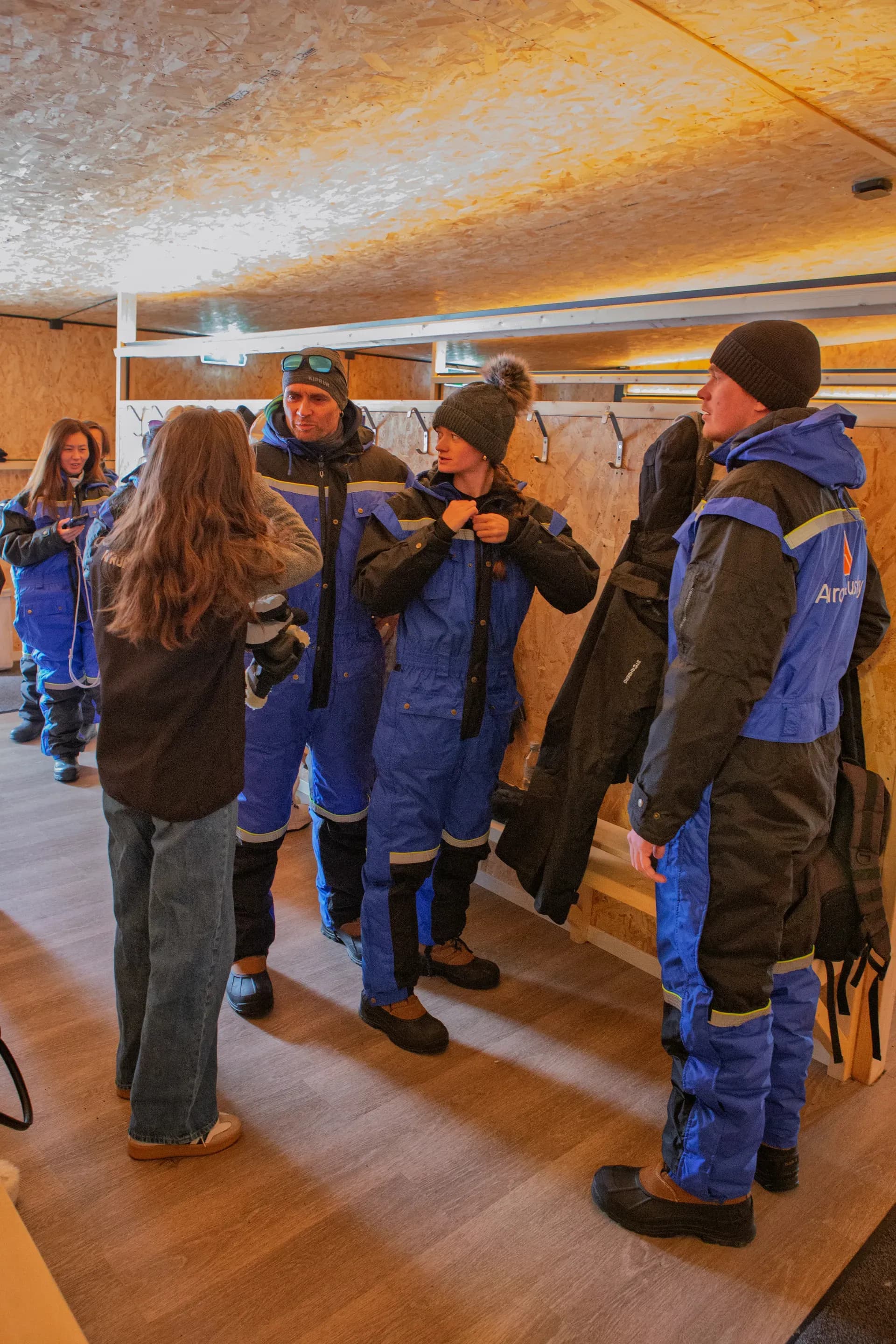
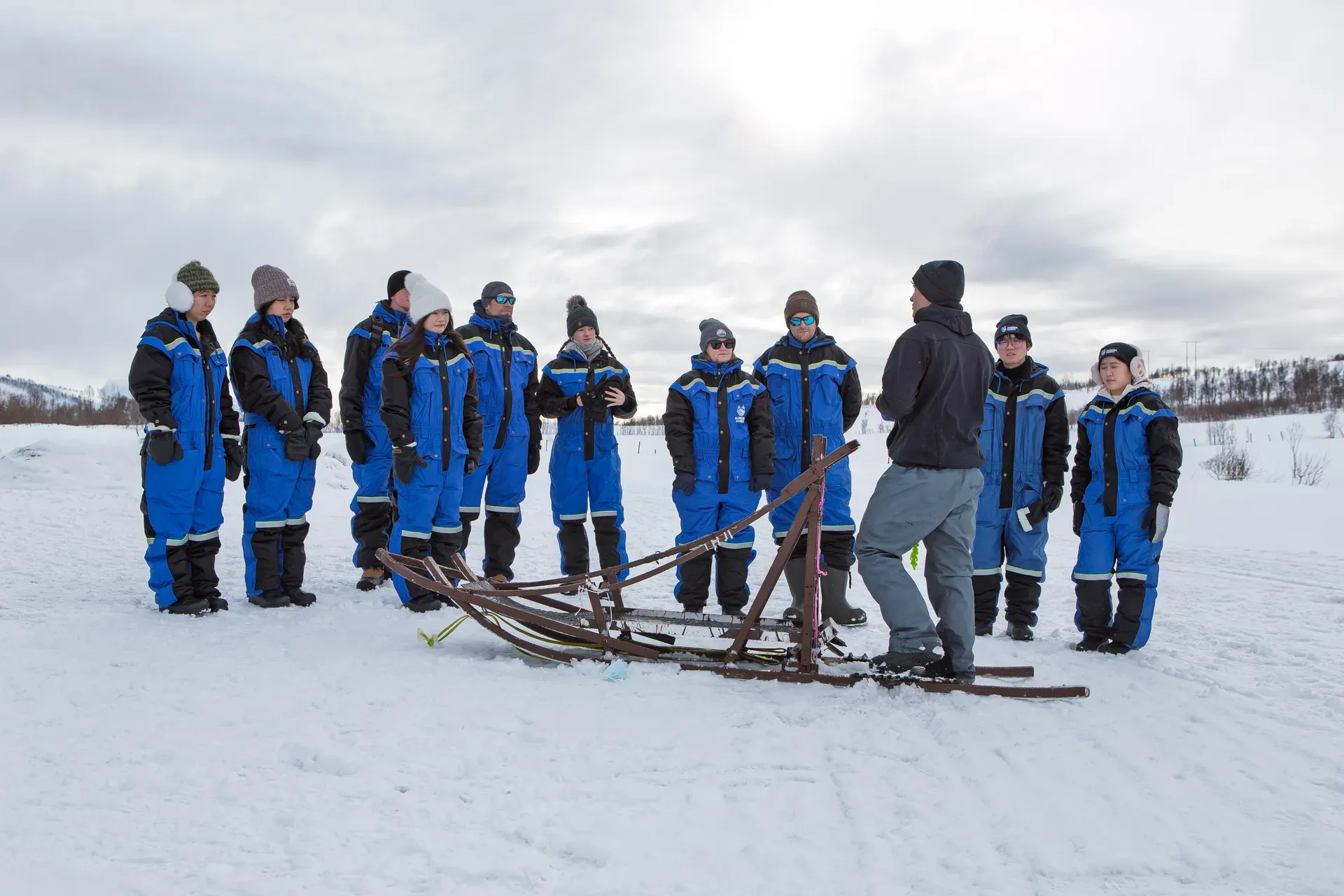
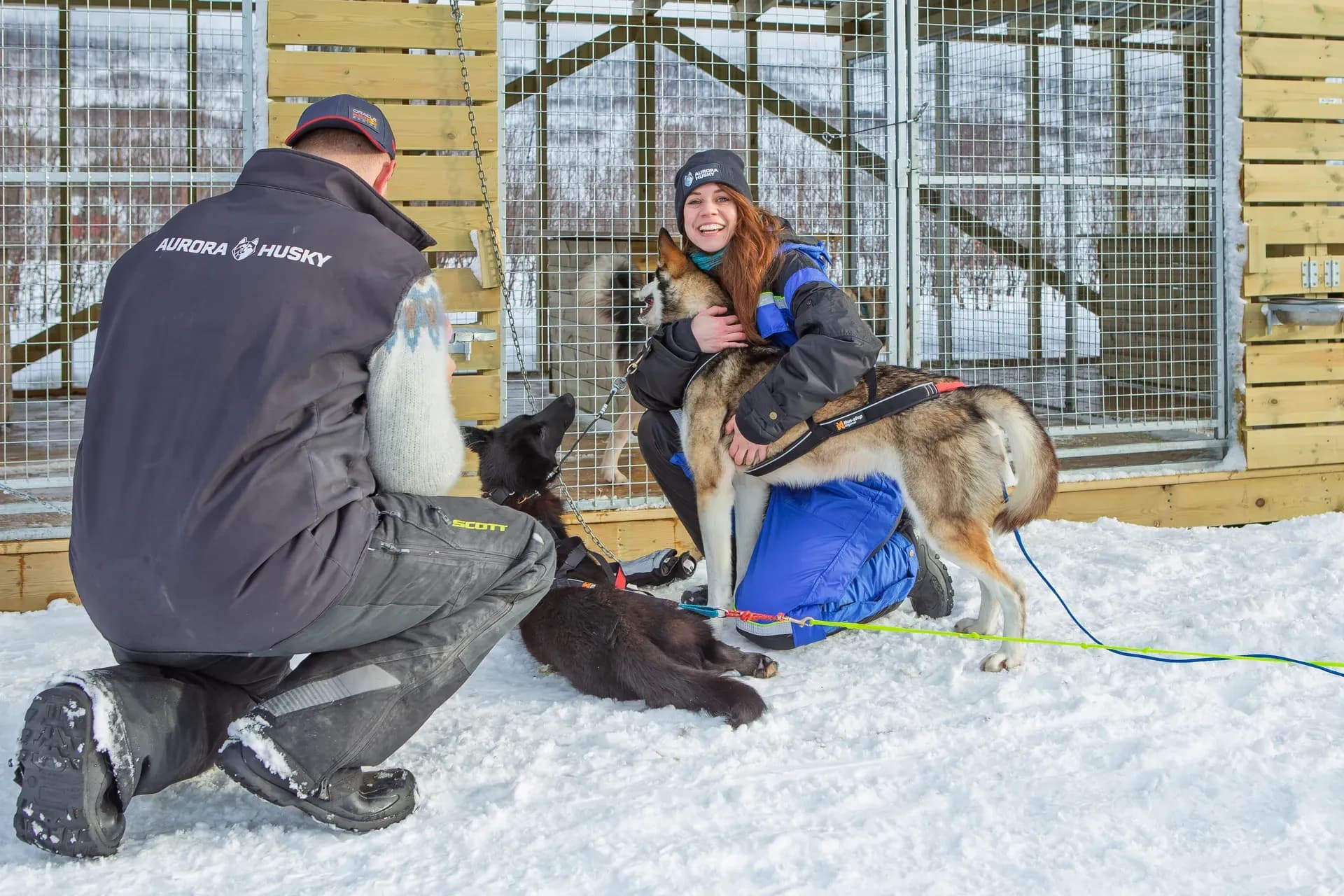
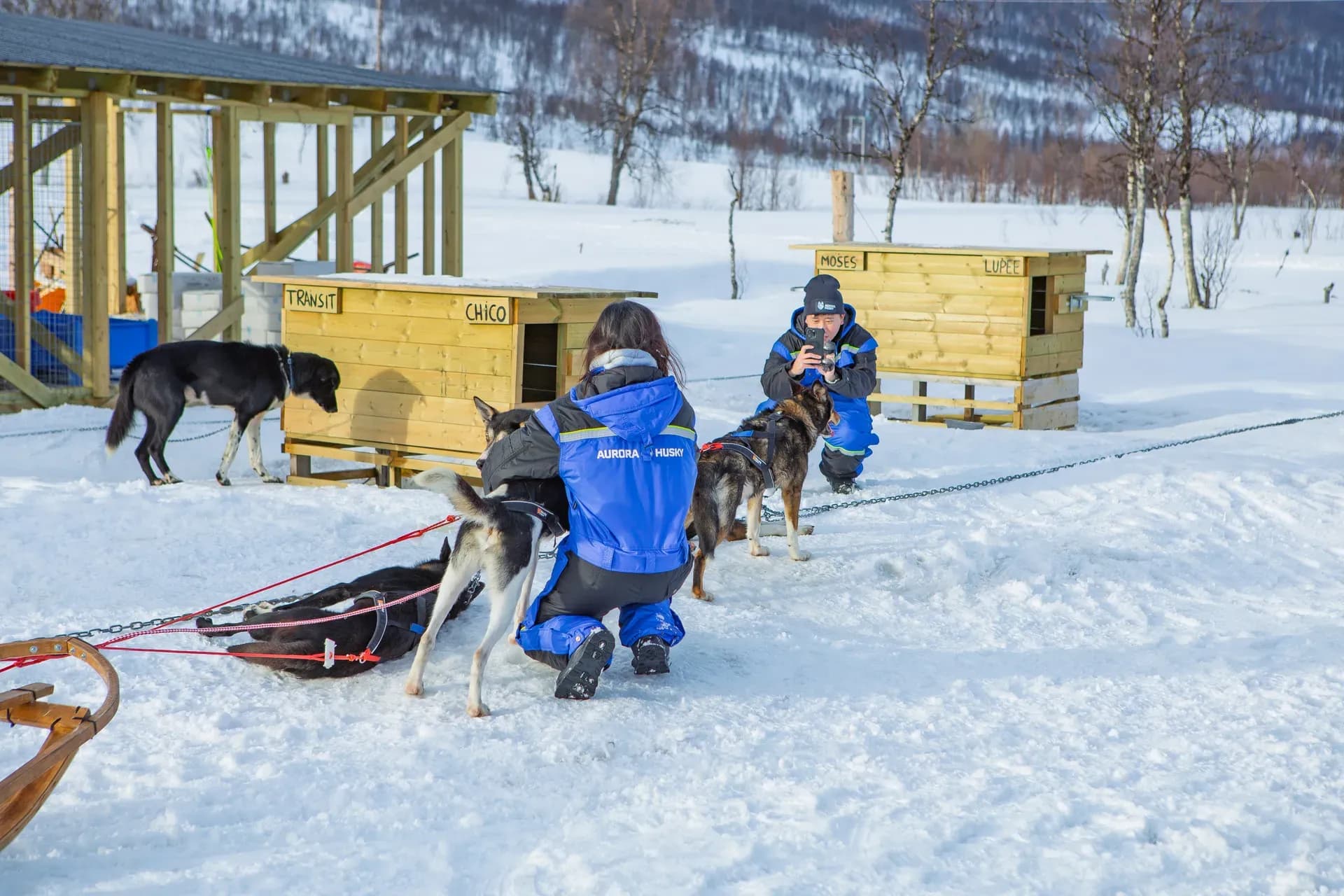
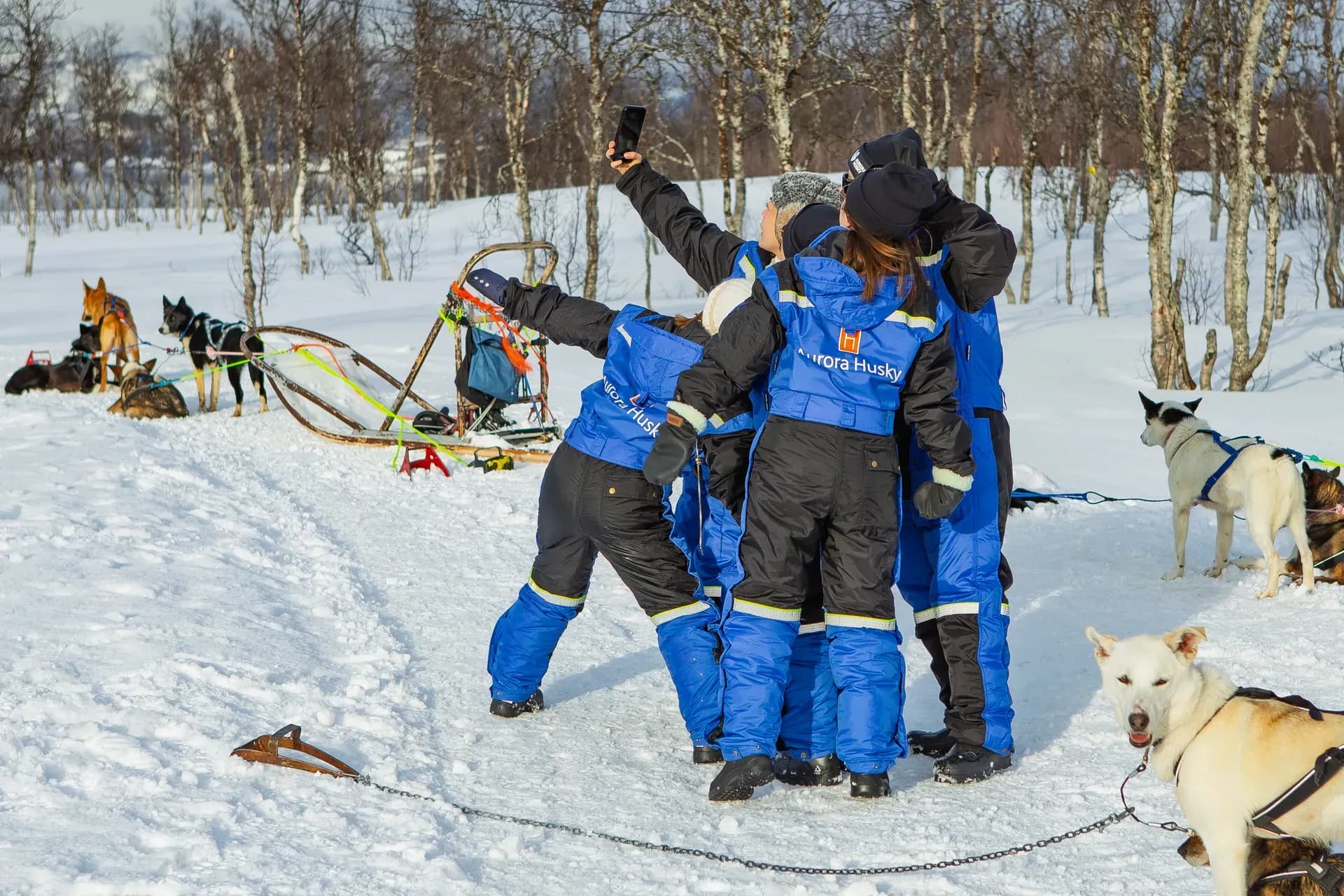
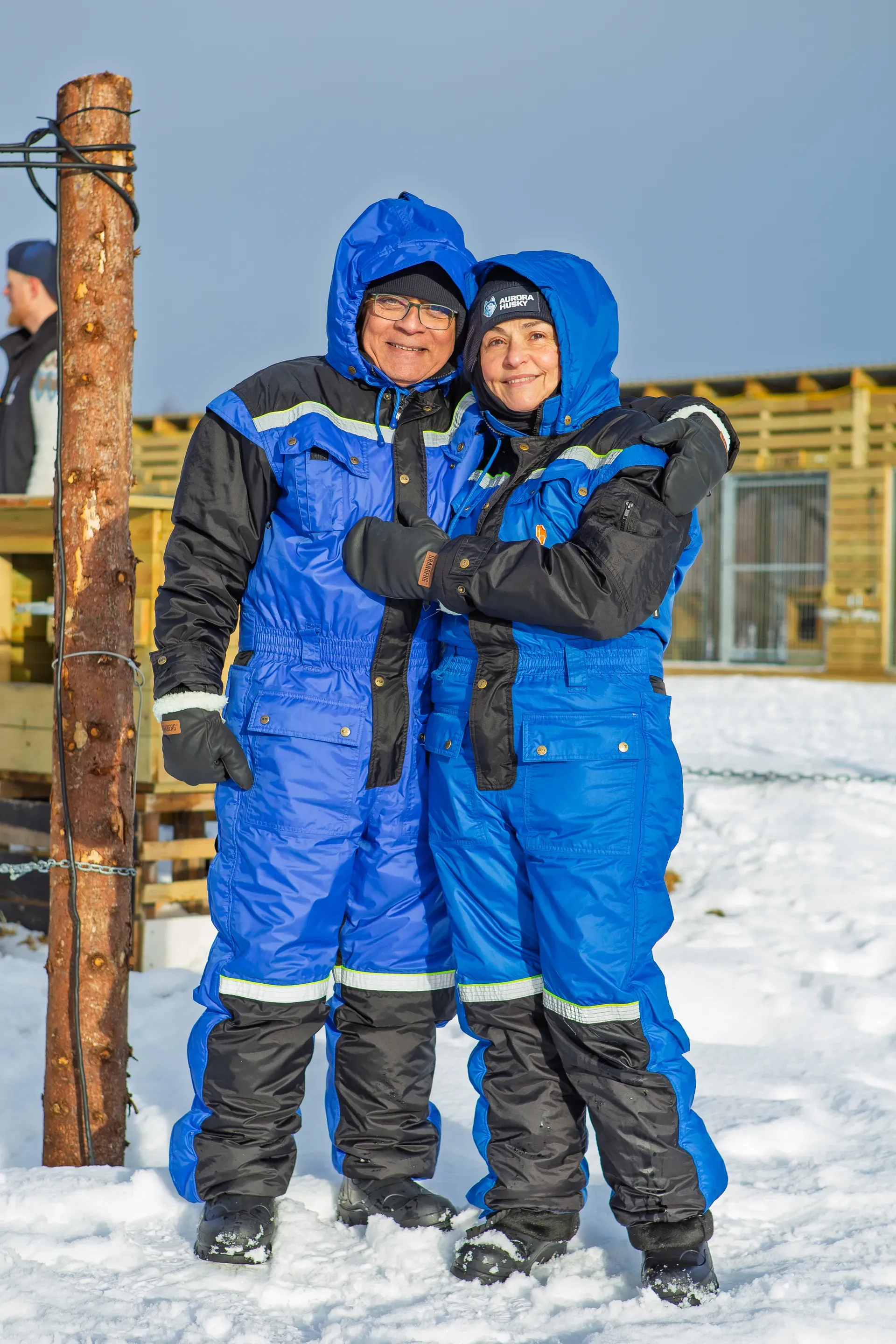
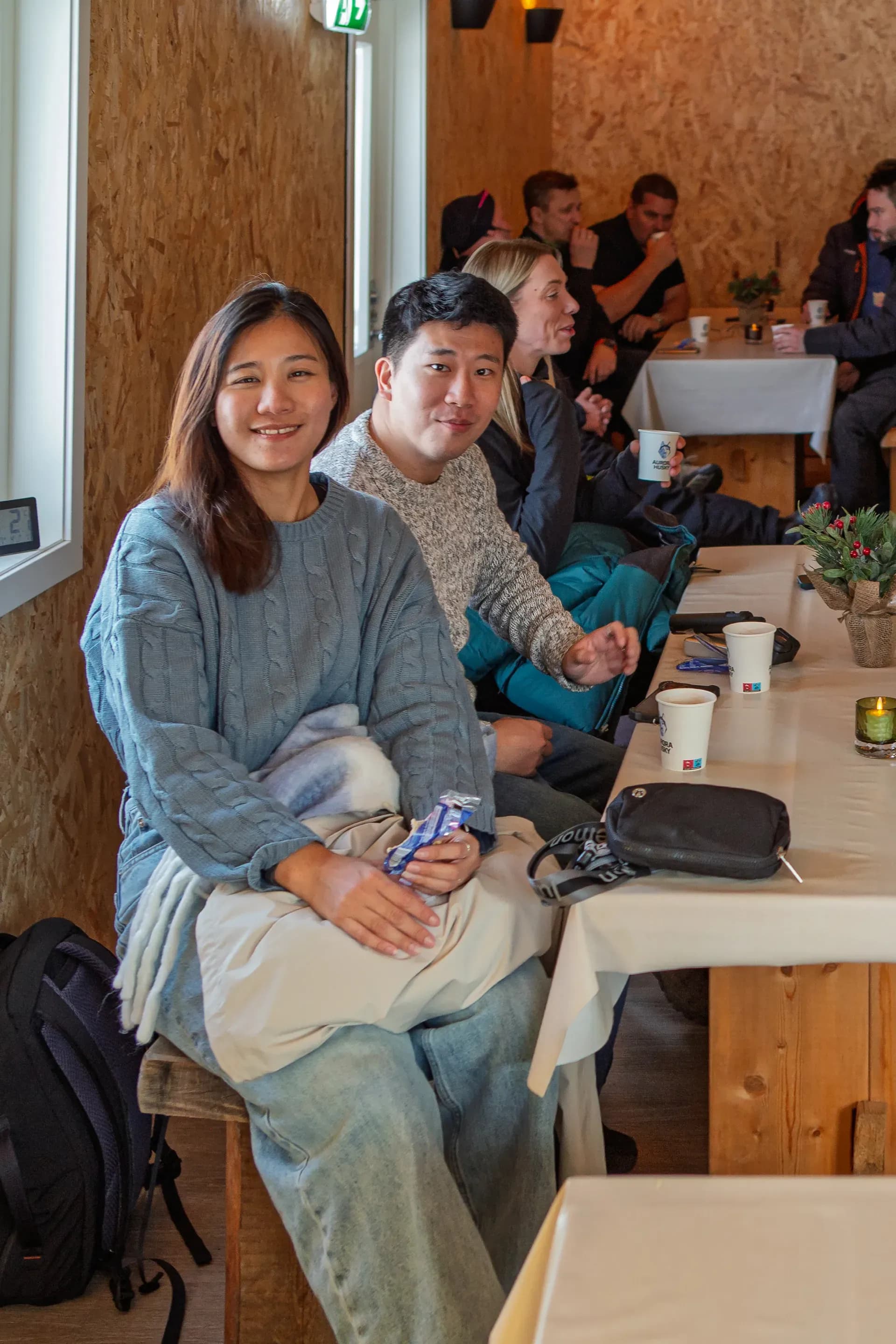
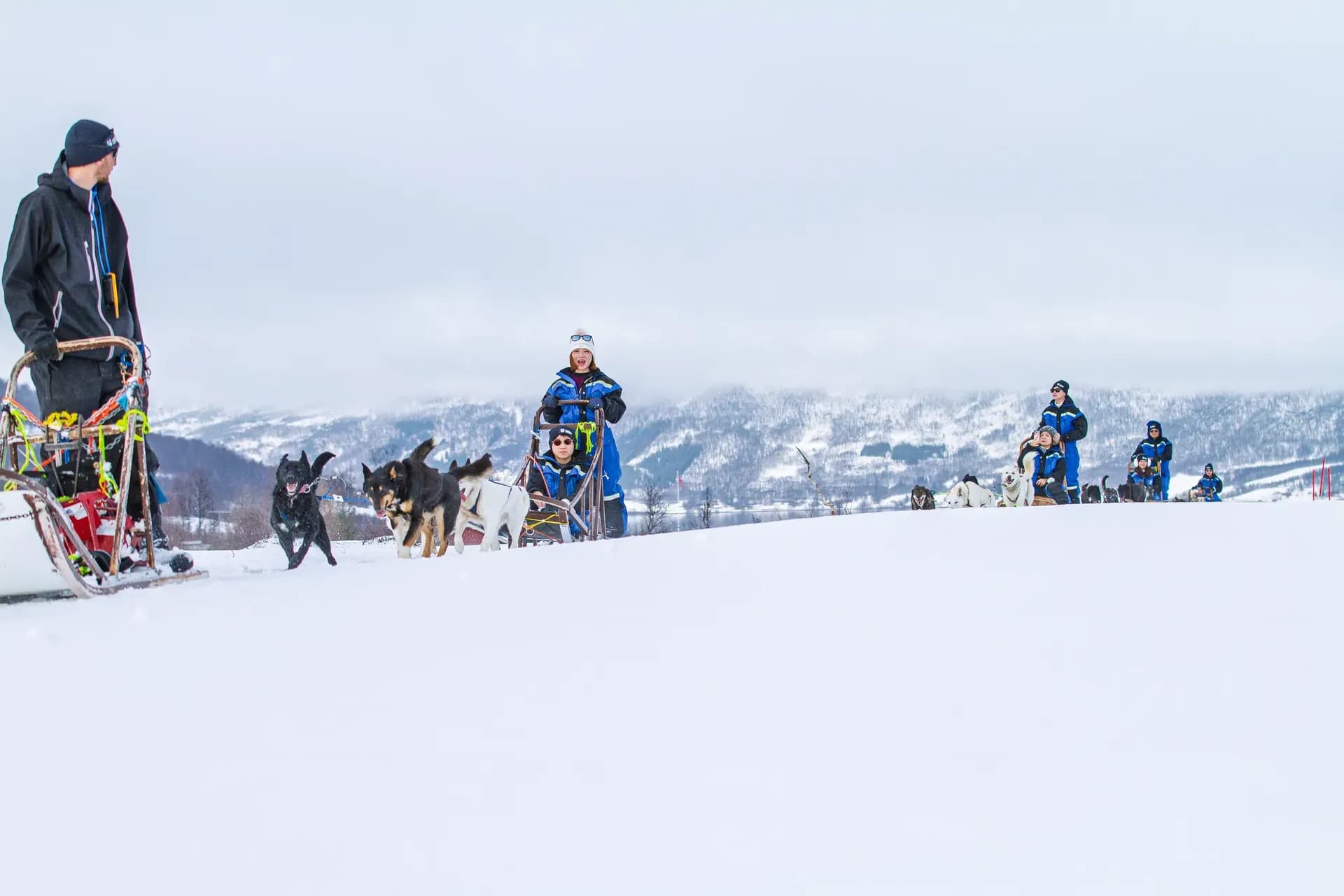
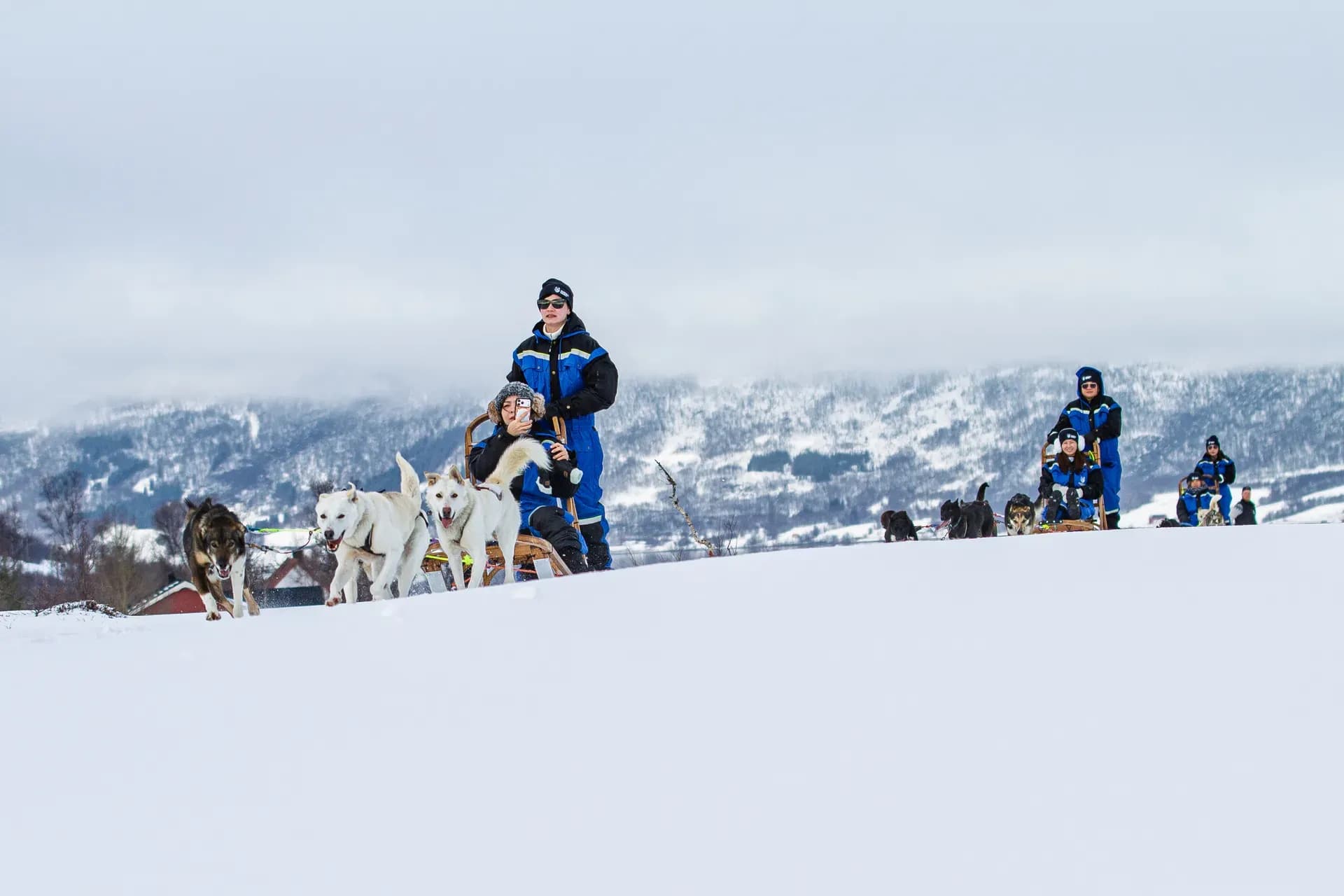
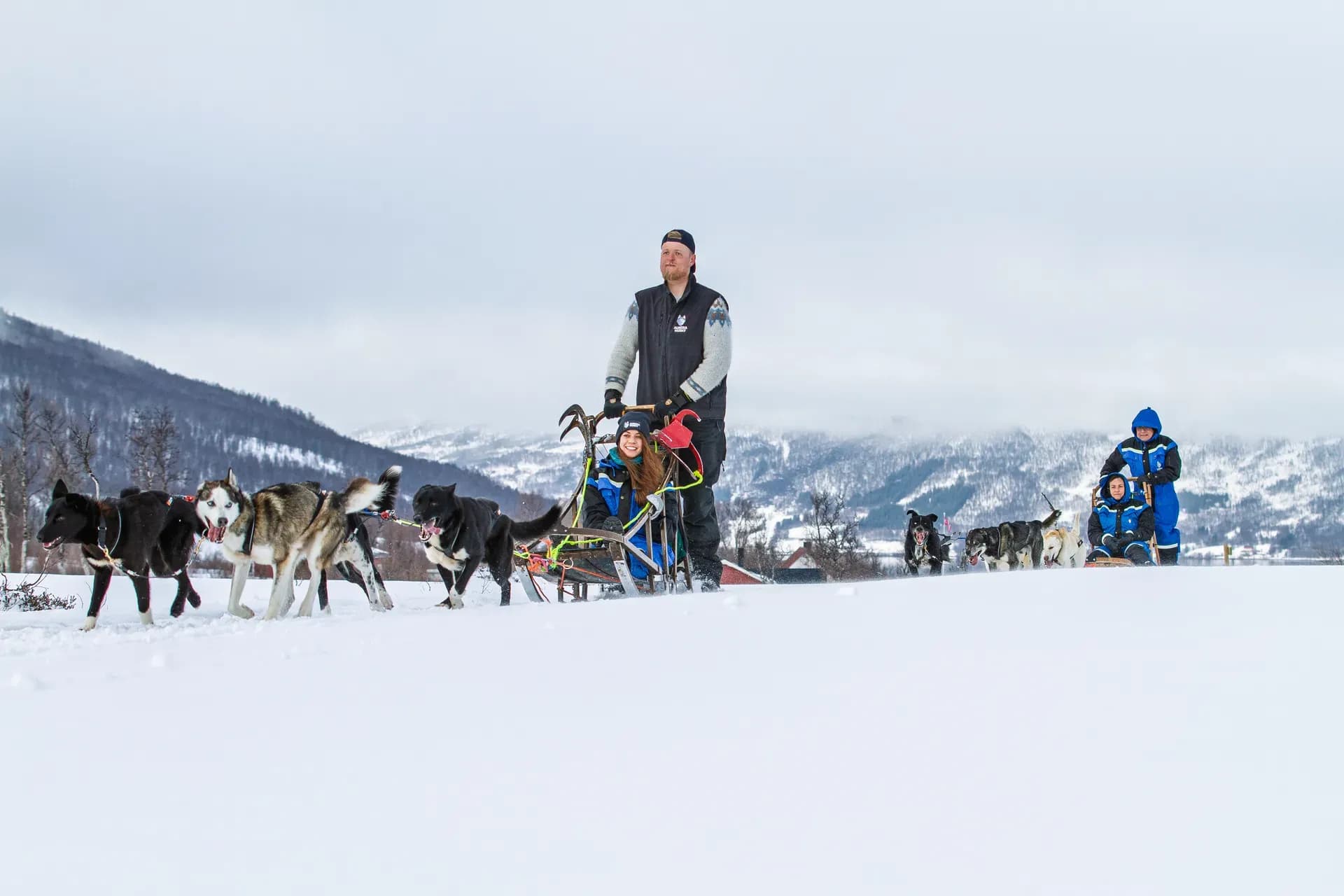
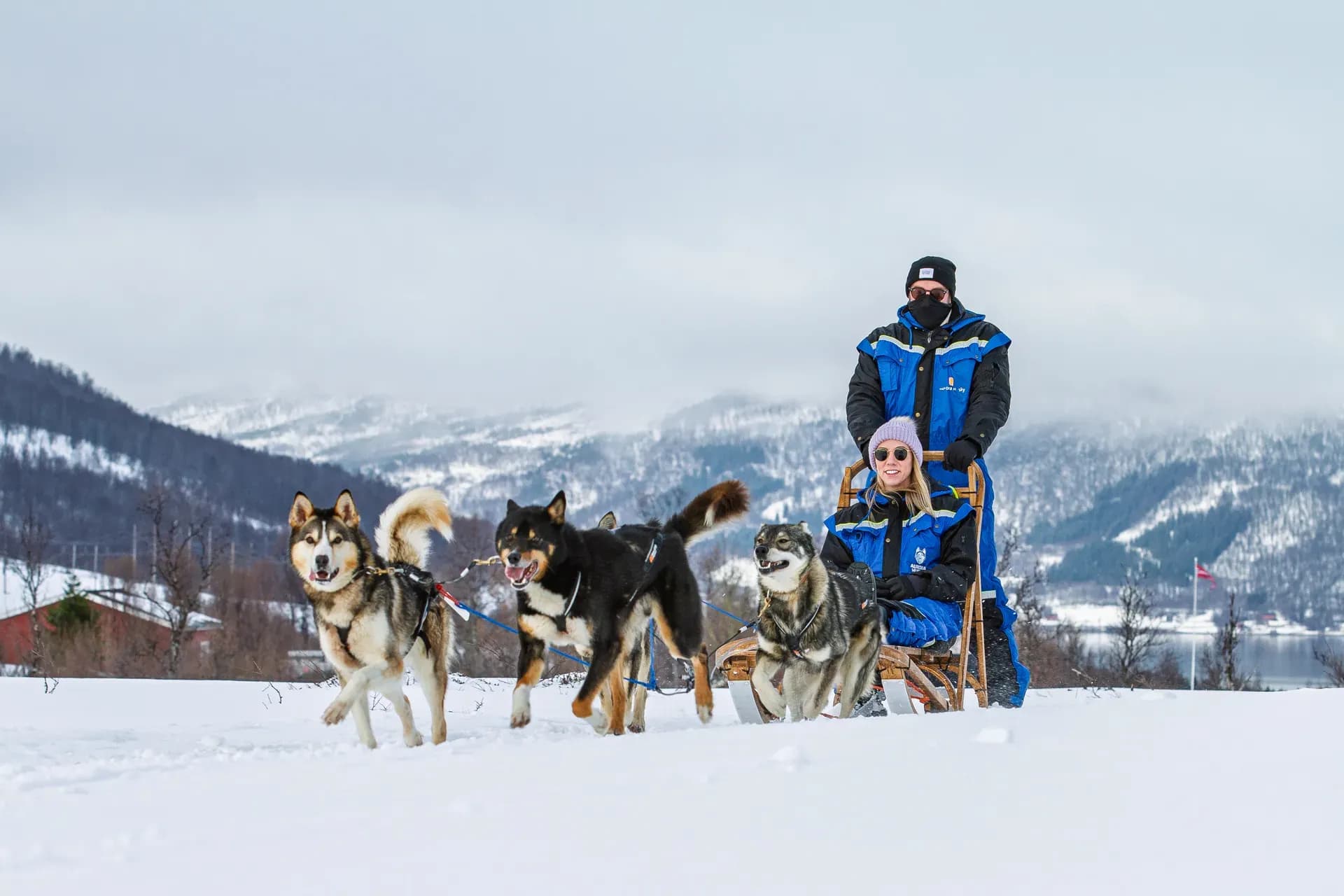
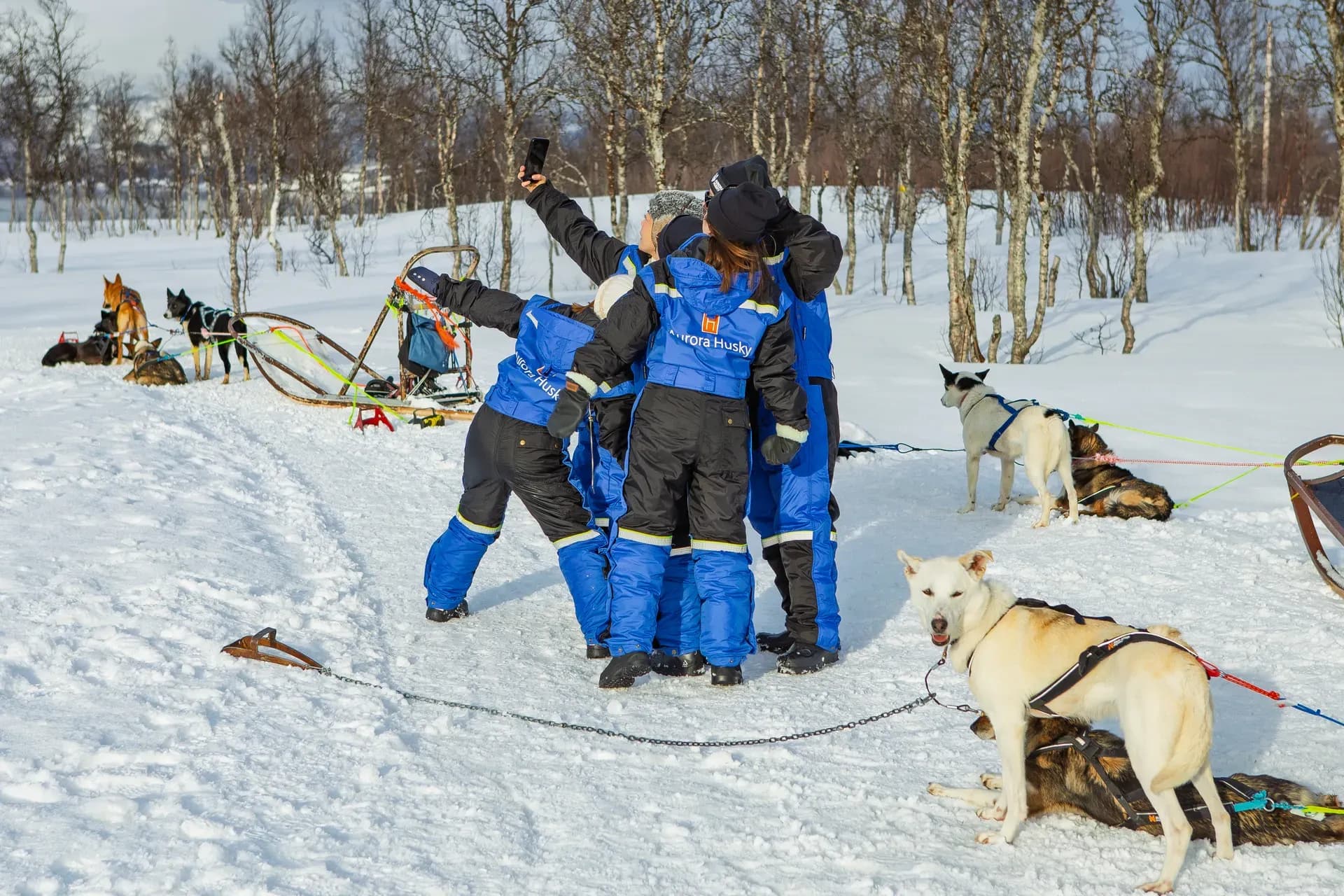
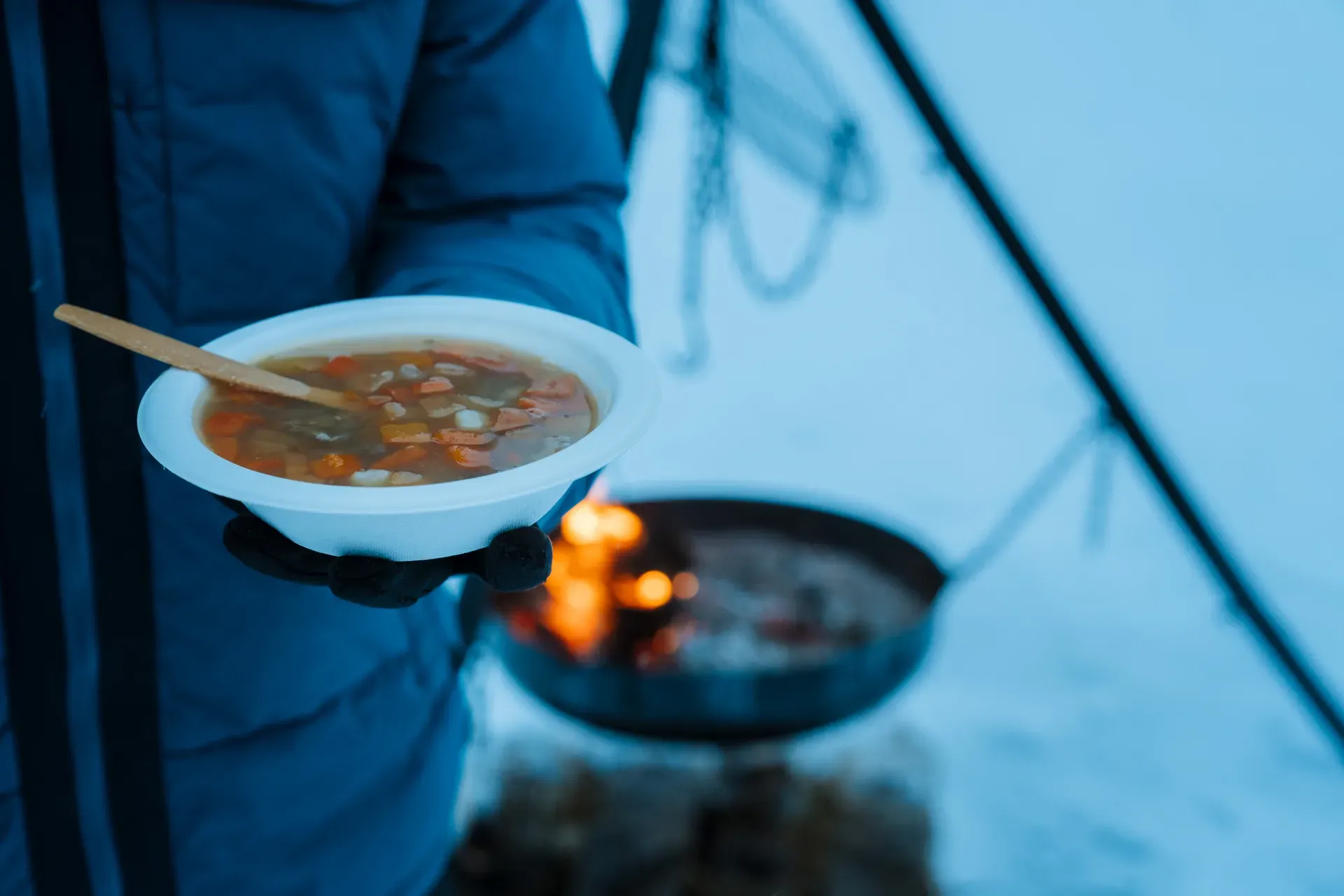
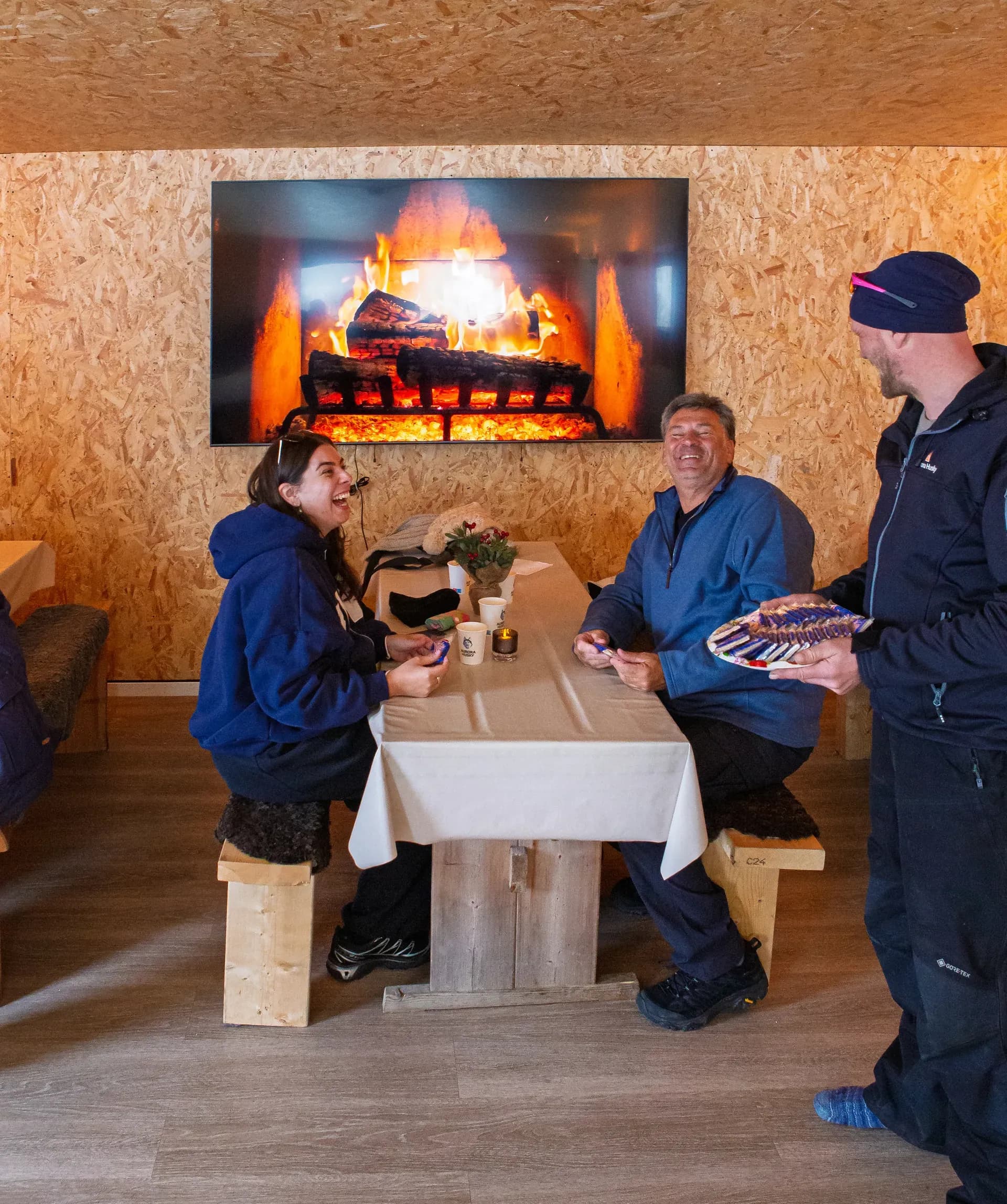
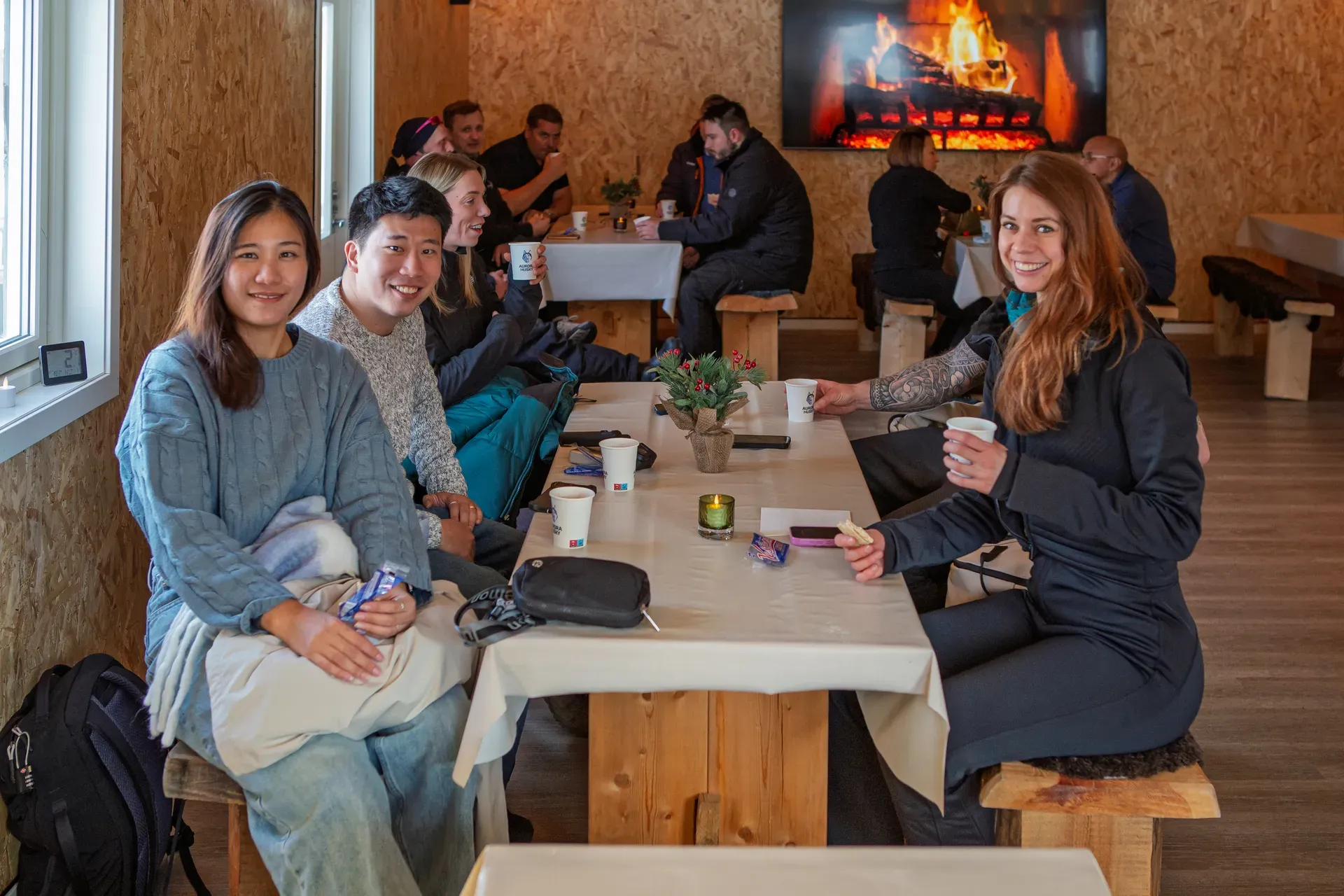
Every tour ends the same way: thermal suits half unzipped, cheeks the colour of the cabin walls, hot drinks going down fast, and the day's stories already growing taller. The cinnamon cake in the warm cabin has its fans, but the real function of this half hour is slower: it is where the experience lands, right before the coach back to Tromsø.
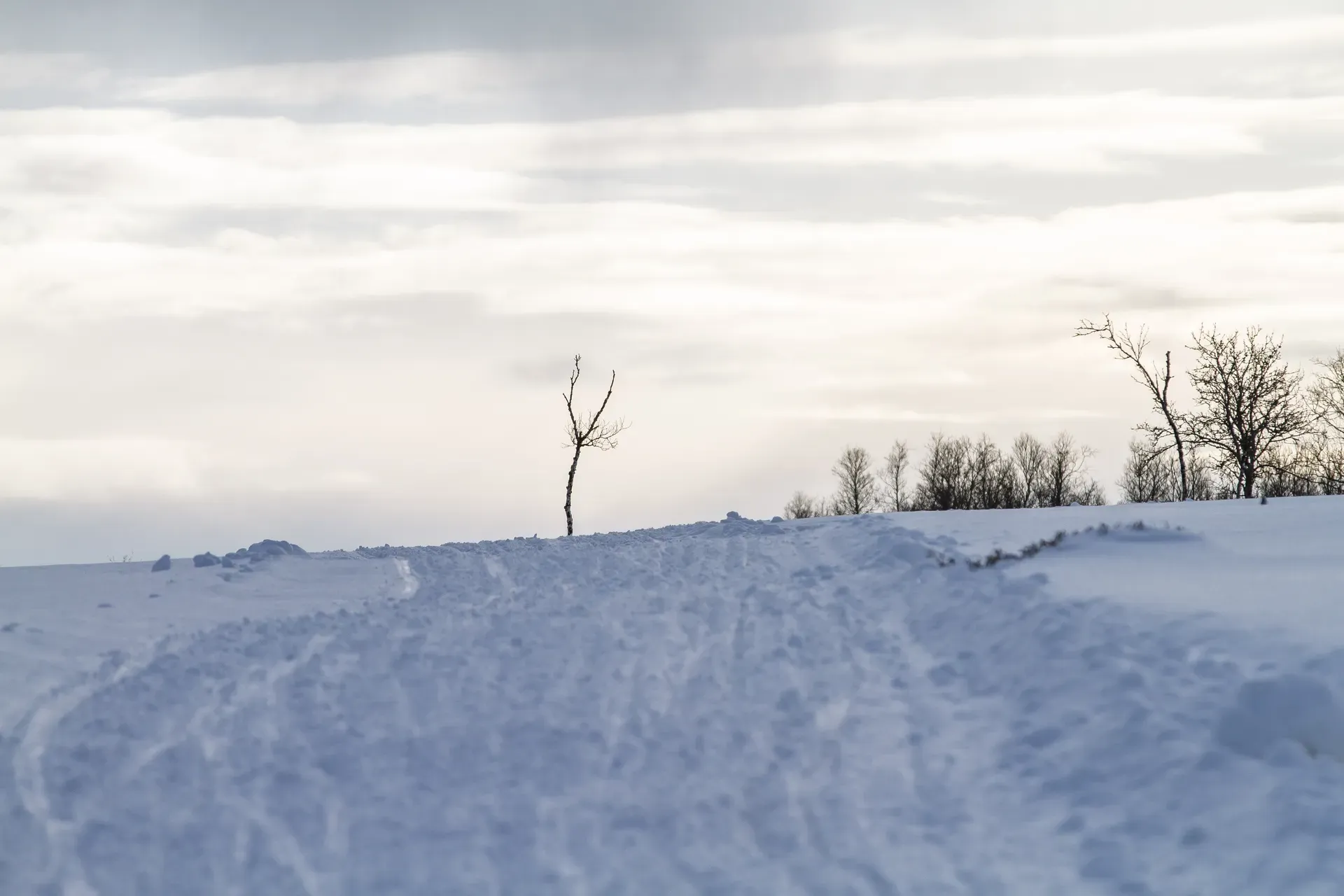
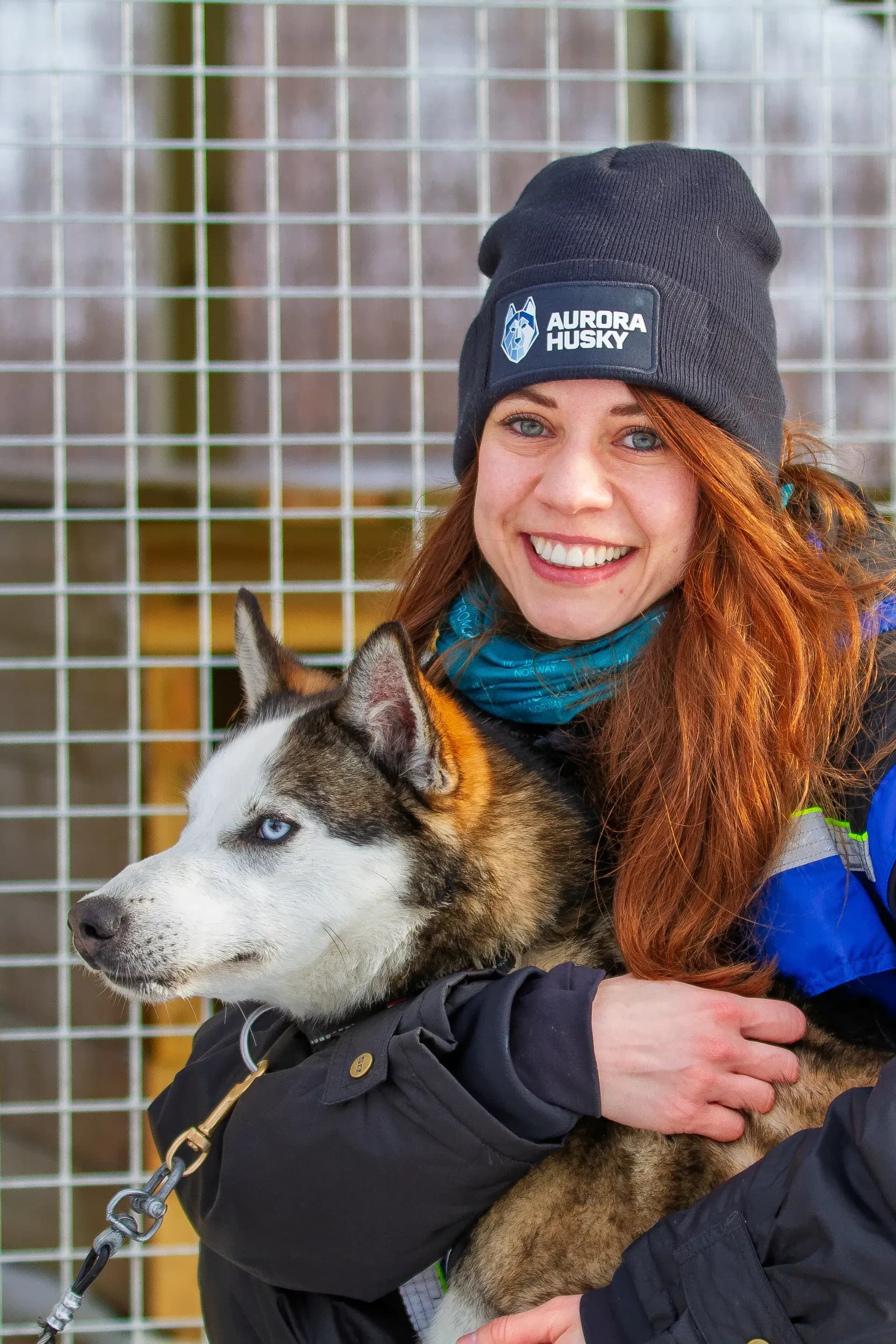
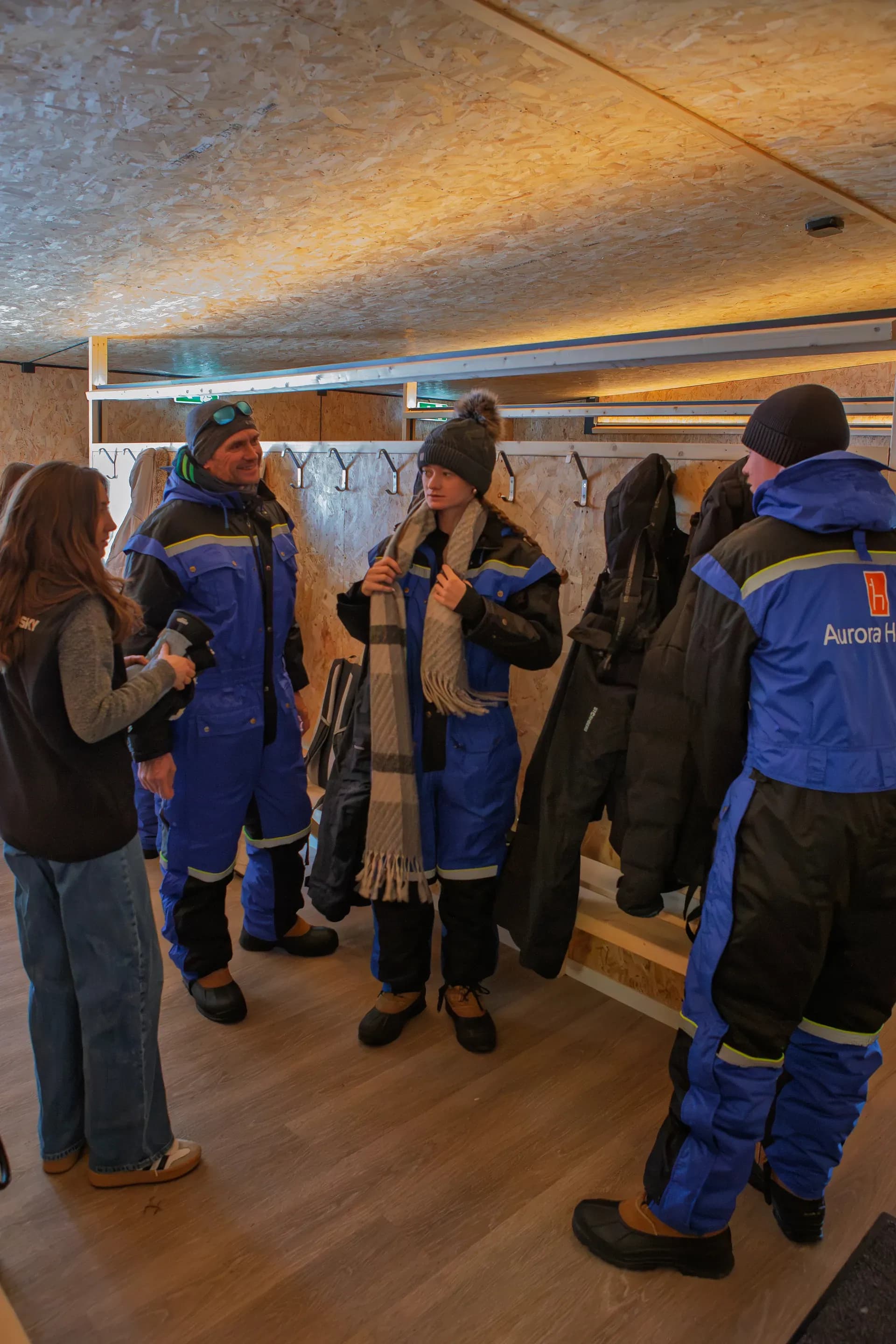
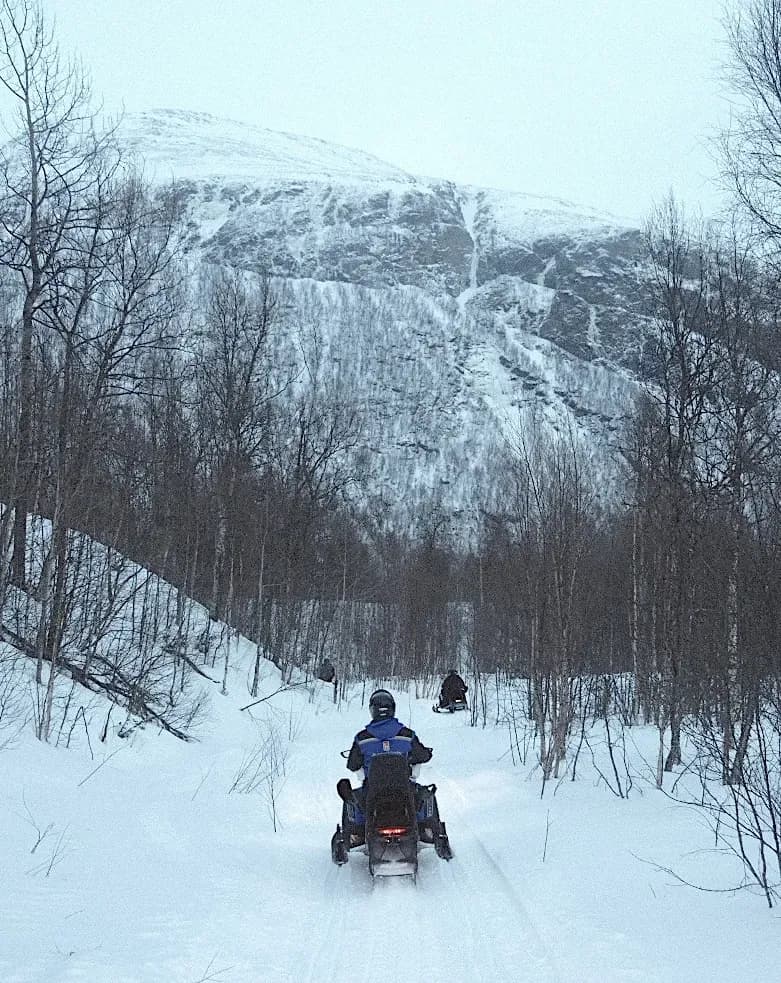
To a guest it is all white. To a musher the trail has texture like a page: the hard-packed line the dogs prefer, the sugar snow at the edges that grabs a runner, the wind slab that says the weather turned last night. Part of the pre-tour instruction is teaching your feet to read a little of it too, which is why the first kilometre is flat and forgiving, and why the last one feels so much easier than it should.
For every aurora picture there are hours like this one: thermos, tripod, hopeful faces, empty sky. We show this frame on purpose. The northern lights are wild, not scheduled, and the guests who see them are usually the ones who came for the dogs and treated the sky as a bonus. That mindset, not an app, is the real aurora strategy.