

We provide the outer layer: an insulated overall, winter boots, mittens and a hat. You bring what goes underneath: a wool base layer top and bottom, a wool mid layer, two pairs of wool socks, a buff or scarf, and thin liner gloves for photos. That is the whole answer. The rest of this page explains why, what changes between driving and sitting, and what to add when the camp drops below -15°C.
What to wear for dog sledding: the checklist
Bring and wear:
- ✦Wool base layer, top and long johns (no cotton)
- ✦Wool or fleece mid layer: sweater and, in the coldest months, fleece trousers
- ✦Two pairs of wool socks, one thin and one thick
- ✦Thin liner gloves for phones, cameras and harnessing
- ✦Buff, neck gaiter or scarf
- ✦Sunglasses from February onwards, goggles if you have them
- ✦Hand warmers if you get cold fingers
- ✦A small bag for your own shoes and jacket to leave on the bus
We provide at our Dog Camp:
- ✦Insulated winter overall (nearly all sizes, child sizes from age 12)
- ✦Winter boots (a wide range of sizes)
- ✦Insulated mittens
- ✦Warm hat or balaclava
Leave at home: cotton anything, jeans, fashion boots, thin trainers, a single pair of thick socks in tight boots.
What we provide, and why it is enough
The overall we hand you is the kind Norwegian mushers wear on long trips. It is windproof, insulated, and long enough to go over your own boots and gloves. The boots are rated well below anything the camp reaches. Guests in the right base layers stay warm in these at -20°C.
Two practical things. First, the overall goes over your own clothes, so wear the layers you plan to keep on, and leave the bulky city jacket on the bus. Second, the boots run large on purpose to leave room for air and two pairs of socks. If they feel snug, ask for a bigger pair. Tight boots are the number one cause of cold feet.
The cabin where you change is heated to a comfortable room temperature. You will be dressing in warmth and stepping into cold, so do not overdress in the cabin. Overheating before you go out means sweating, and sweat is what makes you cold later.
Driver or passenger: the one who sits gets colder
Every sled carries two guests who swap halfway. The driver stands, steers, brakes and pushes uphill. Ten minutes in, most drivers are warm and some are opening the overall at the neck. The passenger sits still in the sled with the wind coming straight at them. Same temperature, completely different experience.
Dress for the passenger half. That means:
- ✦one more layer on the legs than you think you need (fleece trousers under the overall in December to February)
- ✦the buff pulled up over your nose while sitting
- ✦mittens on, liner gloves off, hands inside the sleeve cuffs
- ✦knees bent and feet tucked in, not sticking out over the front of the sled
When you switch to driving, you can loosen the neck and drop the buff. Do not take the mittens off to drive; the handlebar is cold and the brake is metal.
Dressing by temperature
Check the camp forecast for Malangen the night before, not Tromsø. The camp is inland and usually several degrees colder than the city.
Above -5°C (typical October, April, mild days all winter) Base layer, one mid layer, one pair of thick wool socks over a thin pair, buff. The overall does the rest. Most people are warm.
-5°C to -15°C (typical November to March) Base layer, fleece or wool mid layer top and bottom, two pairs of wool socks, buff, hat under the provided hat if you like a snug fit. Liner gloves inside the mittens. Hand warmers in the mittens for the passenger half.
Below -15°C (cold snaps, mostly January and February) Everything above, plus a second mid layer on top, a balaclava or full-face buff, hand warmers in mittens and toe warmers in boots. Cover every bit of skin while sitting. The run is 30 minutes; you will be fine, but you will notice the cold on the passenger half.
Feet
Cold feet ruin dog sledding more than anything else, and they are the easiest problem to prevent.
- ✦Wear a thin wool sock with a thick wool sock over it. Never cotton, which holds sweat.
- ✦Make sure the boot is loose enough to wiggle your toes. Tight boots squeeze the blood out of your feet.
- ✦Do not put on the boots until the last moment before going outside. Warm feet sweat in a warm cabin.
- ✦Toe warmers stuck to the top of your socks work well below -15°C.
- ✦If you have your own insulated winter boots rated to -20°C, you can wear them, but ours are usually warmer.
Hands
You will handle harnesses, hold a cold handlebar, and want to take photos. The trick is two layers.
- ✦Thin liner gloves stay on all the time. Touchscreen-compatible ones let you use your phone without bare skin.
- ✦The provided mittens go over the liners for driving and for the passenger half.
- ✦Hand warmers go inside the mitten, on the back of the hand.
- ✦Never take a bare hand out for more than a few seconds at -15°C.
Head and face
The provided hat is enough for most days. Add:
- ✦A buff or neck gaiter you can pull up over your nose while sitting
- ✦A balaclava below -15°C
- ✦Sunglasses from February, when the sun is back on the snow. In March the glare is strong enough to give you a headache without them
- ✦Goggles if you own them; they stop wind and snow spray from the dogs on the passenger half
Take out earrings that touch bare skin. Metal gets very cold.
Phone and camera in the cold
Cold kills batteries. A phone at 100% can shut down within minutes at -15°C.
- ✦Keep the phone inside the overall, in an inner pocket, close to your body. Take it out, shoot, put it back.
- ✦Bring a spare battery for a camera and keep it in an inner pocket too.
- ✦Use liner gloves that work with a touchscreen.
- ✦A wrist strap or lanyard. Dropping a phone from a moving sled means it stays where it lands.
- ✦Do not try to film while driving. Film as the passenger, then swap.
What to leave on the bus
The bus is heated and stays at the camp. Leave:
- ✦your outdoor jacket and city boots
- ✦any bag you do not need on the sled
- ✦shopping, laptops, anything you would not want in a sled
Take on the sled only what fits inside the overall: phone, camera, hand warmers.
Mistakes we see every week
From the guides, in order of how often we see them:
- 1Cotton under the overall. T-shirts, hoodies, jeans. Cotton gets damp and stays damp. Wool only.
- 2Boots too tight. People choose their normal size. Go up one or two sizes and wear two pairs of socks.
- 3Overdressing in the cabin, then sweating on the walk to the dogs. Put the hat and mittens on at the door, not by the heater.
- 4Bare hands for photos. Liner gloves solve this completely.
- 5Nothing on the face. The passenger half at -12°C with wind on bare cheeks is the most common reason someone says they were cold.
Book the dog sledding tour from Tromsø, see which month to pick, or read how our dogs live.
Frequently asked questions
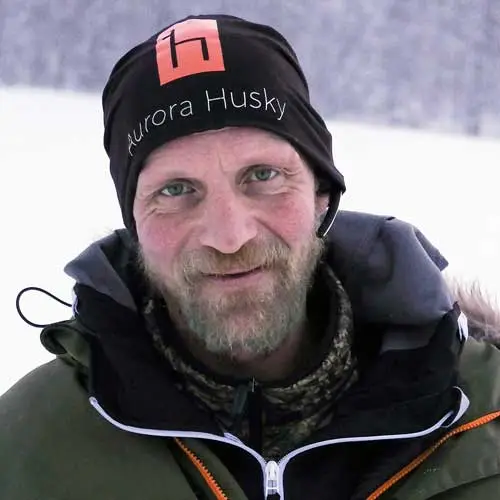
Bjørn Tore Helgesen
Aurora Husky Guide & Arctic Enthusiast
